
The Hidden History of Soho: Eight Places You Can Still Stand On
The history of Soho is unusually easy to walk, because almost none of it has been cleared away. A square kilometre of central London contains the pump that founded epidemiology, the attic where television was first shown to the public, and the basement where British rock and roll began, all within ten minutes of each other.
Soho Square: begun 1681 as King's Square, named for Charles II. His statue by Caius Gabriel Cibber still stands there.
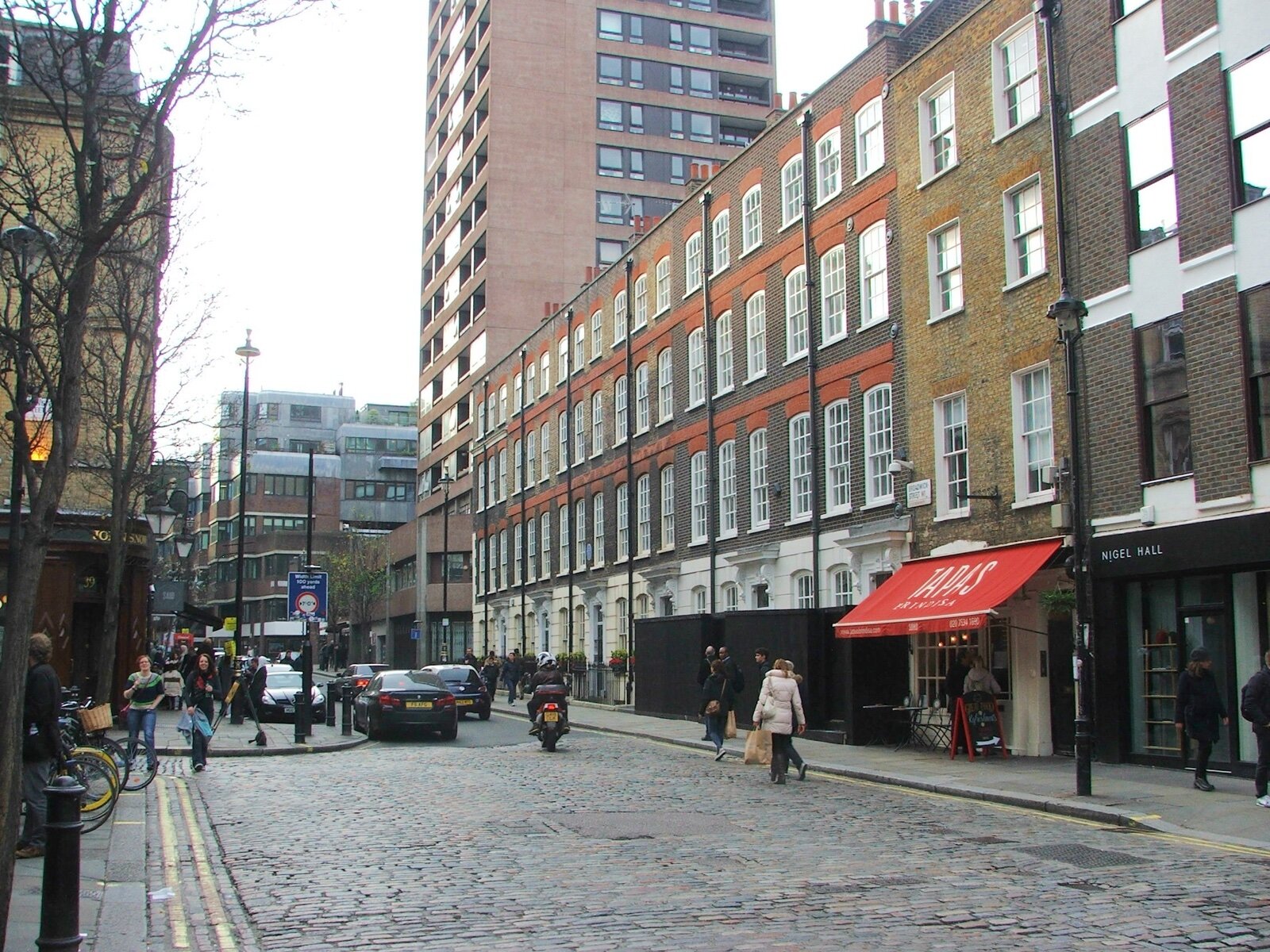
Broadwick Street: formerly Broad Street. 500 people died within ten days in the cholera outbreak of 1854, and John Snow traced it to one water pump.
22 Frith Street: where John Logie Baird demonstrated live television to members of the Royal Institution on 26 January 1926.
59 Old Compton Street: the 2i's Coffee Bar, 1956 to 1970. Tommy Steele and Cliff Richard were both found there.
17 St Anne's Court: Trident Studios, 1968 to 1981. The Beatles recorded Hey Jude there on 31 July 1968.
1. Soho Square, and the hut that is not Tudor
Soho Square is the oldest thing here. Building began in 1681, and it was originally King's Square, named for Charles II, whose statue by the Danish sculptor Caius Gabriel Cibber was made the centrepiece. The statue has had a wandering life: it was once part of a late seventeenth century fountain, was taken away to a private estate in Harrow in the late nineteenth century, and only came back in the mid-twentieth.
By 1746 the square had taken the name of the surrounding district, and that name came from a hunting cry. Before the streets went in, this was open ground used for hunting, and "so-ho" was the call used to work the hounds. It is one of the few London place names whose origin is a noise.
The half-timbered hut in the middle of the garden looks like the oldest thing in the square and is the newest. It was built in 1925 by the Charing Cross Electricity Company, which needed a discreet above-ground way into a substation directly under the square, and it doubled as shelter for the gardeners. The design copied a mock-Tudor hut that had stood on the same spot in the 1870s. During the war the space beneath was used as an air-raid shelter.
2. The pump on Broadwick Street
The most consequential thing that ever happened in Soho happened to a water pump. On 31 August 1854 cholera broke out in the streets around Broad Street, and within ten days 500 people were dead. The prevailing theory blamed bad air.
John Snow, a physician who lived nearby, did not believe it. He mapped the deaths street by street and found them clustered around a single public pump. He took the evidence to the parish authorities, who removed the pump handle on 8 September, and the outbreak subsided. He was helped by the Reverend Henry Whitehead, a local curate who began as a sceptic, was persuaded by the data, and then did the work that closed the case: tracing the source back to a baby with cholera whose contaminated nappy water had drained into a leaking cesspool beside the pump.
Broad Street became Broadwick Street, which is why the address in the textbooks cannot be found. A replica pump stands near the original site, and the pub on the corner is the John Snow. Snow himself was teetotal, which is a joke the street has been making ever since.
3. 22 Frith Street: two attic rooms and the first television
John Logie Baird rented two attic rooms at 22 Frith Street and used them as a laboratory from November 1924 to February 1926. On 26 January 1926 he invited members of the Royal Institution up the stairs and showed them a working transmitting machine: a large revolving wooden disc holding lenses, a revolving shutter behind it, and a light-sensitive cell, arranged so that an image of a person standing in front of the apparatus was swept across the cell at speed. It was the world's first public demonstration of live television.
An English Heritage blue plaque records it on the building, which is now Bar Italia. The centenary fell in January 2026 and was marked with a commemorative plaque at Bar Italia and the opening of a room named for Baird, unveiled by his grandson.
4. 59 Old Compton Street: the 2i's Coffee Bar
The 2i's opened as a coffee bar on 22 April 1956 and closed in 1970, and in those fourteen years it did more for British popular music than any building of its size has a right to. Skiffle was giving way to rock and roll, the basement held a few dozen people, and the acts who played there included two who were spotted on the spot: Tommy Steele and Cliff Richard.
The room is long gone. What remains is a plaque, and the fact that every account of how British rock started runs through this address.
5. 17 St Anne's Court: Trident Studios
Trident was built in 1967 by Norman Sheffield, a drummer with the Hunters, and his brother Barry, and ran as a recording studio from 1968 to 1981 in a narrow alley between Wardour Street and Dean Street. It was among the first British studios to use Dolby noise reduction and an eight-track machine, which is why bands went there rather than to their own label's rooms.
The Beatles recorded Hey Jude at Trident on 31 July 1968, along with part of the White Album. David Bowie and Queen both made early records there. The alley looks like nothing at all, which is the point: Soho has never signposted itself well.
6. 28 Dean Street: Karl Marx's two rooms
Marx lived with his family in two rooms on the top floor of 28 Dean Street through the 1850s, in poverty, while writing in the Reading Room of the British Museum a short walk north. Three of his children died during the Soho years. The building now houses a restaurant, with a plaque on the front.
7. Great Windmill Street: "We Never Closed"
The Windmill Theatre opened at 17 to 19 Great Windmill Street on 22 June 1931 and found its formula the following February, when the manager Vivian Van Damm launched a non-stop variety programme called Revudeville. It mixed comedy and musical turns with static nude tableaux, the performers holding still because the law permitted nudity only if nobody moved.
The theatre kept going through the Blitz, which produced the slogan Van Damm made famous, "We Never Closed", and the inevitable Soho variant, "We Never Clothed". It gave up on 31 October 1964, unable to compete with the strip clubs that had grown up around it, many of them staffed by people who had learned the trade at the Windmill.
8. St Anne's tower, Wardour Street
The parish church of St Anne's was built in 1677 to 1686 and given a new tower in 1803 when the original became unsafe. On the night of 24 September 1940 two high explosive bombs hit it, and the body of the church burnt down. The tower stood.
The site spent decades as a bomb site and then a car park before the Soho Society pushed through the present building in 1991. In a brick chamber beneath the tower are the ashes of Dorothy L Sayers, the novelist, who was churchwarden here for years. The churchyard behind it is one of the few places in Soho to sit down without buying something.
Walking it
All eight are within about a fifteen minute walk of each other, and the sensible order runs south from Soho Square: down Frith Street past number 22, right into St Anne's Court for Trident, out onto Wardour Street for the church tower, west to Broadwick Street for the pump, then back east along Old Compton Street for the 2i's, with a detour to Great Windmill Street at the southern edge. Nothing charges admission. Practical detail on getting in and out of the area is in our guide to getting around W1.
If you want the present-day version of the same square kilometre, our complete guide to Soho covers what is open now, the best restaurants in Soho covers dinner, and the Chinatown guide covers the streets immediately south. More W1 writing is on The W1 London.
Frequently Asked Questions
Where was the Broad Street cholera pump?
On what is now Broadwick Street, near the junction with Lexington Street. Broad Street was renamed Broadwick Street later in the nineteenth century, which is why the address in the textbooks no longer exists on a map. A replica pump stands close to the original spot, and the John Snow pub on the corner marks it.
Where did John Logie Baird first demonstrate television?
In two attic rooms at 22 Frith Street, Soho, which he used as a laboratory from November 1924 to February 1926. On 26 January 1926 he showed working live television there to members of the Royal Institution, the world's first public demonstration. An English Heritage blue plaque marks the building, which is now occupied by Bar Italia, and a centenary plaque was unveiled in January 2026.
What was the 2i's Coffee Bar?
A basement coffee bar at 59 Old Compton Street that ran from 1956 to 1970 and did more than anywhere else to launch British rock and roll. Tommy Steele and Cliff Richard were both discovered performing there. It opened as a coffee bar on 22 April 1956, at the point when skiffle was turning into something louder, and the room downstairs held a few dozen people.
Why is Soho called Soho?
From a hunting cry. The area was open field used for hunting before it was built on, and 'so-ho' was the call used to urge on hounds. The name had displaced the square's original title of King's Square by the mid-eighteenth century. Soho Square itself was begun in 1681 and named for Charles II, whose statue by Caius Gabriel Cibber still stands in the middle of it.
What is the Tudor hut in Soho Square?
Not Tudor at all. The half-timbered hut in the middle of the square was built in 1925 for the Charing Cross Electricity Company, which needed an above-ground entrance to a substation directly beneath the square, and it doubled as a gardeners' shelter. Its design copied an earlier mock-Tudor hut that stood there in the 1870s. The space below was used as an air-raid shelter in the Second World War.
Is there anything left of the old St Anne's Church?
The tower. Two high explosive bombs hit St Anne's on the night of 24 September 1940 and the body of the church burnt down, leaving the 1803 tower standing on Wardour Street. The site was a bomb site and then a car park for decades before the present building was created in 1991. The ashes of the novelist Dorothy L Sayers, a long-serving churchwarden, are interred in a chamber beneath the tower.
Sources
- London Museum: John Snow, cholera and the Broad Street pump, for the outbreak, the death toll and the memorial
- English Heritage blue plaque: John Logie Baird, for the 22 Frith Street laboratory and the 26 January 1926 demonstration
- St Anne's Church, Soho: history, for the 1940 bombing, the surviving tower and Dorothy L Sayers
Checked on 10 September 2026. Plaques and replicas are occasionally removed for building works; the buildings themselves are all still standing.