
How to Buy Property in Prime Central London: A Step-by-Step Guide
Knowing how to buy property in central London is mostly a matter of knowing where the money and the delays actually sit. The stamp duty on a 2 million pound home is 153,750 pounds before any surcharge. The leasehold and estate-landlord structure of W1 can cost you more than the negotiation ever saves. And an overseas company that has not registered with Companies House cannot complete at all. Here is the sequence, in order, with the numbers.
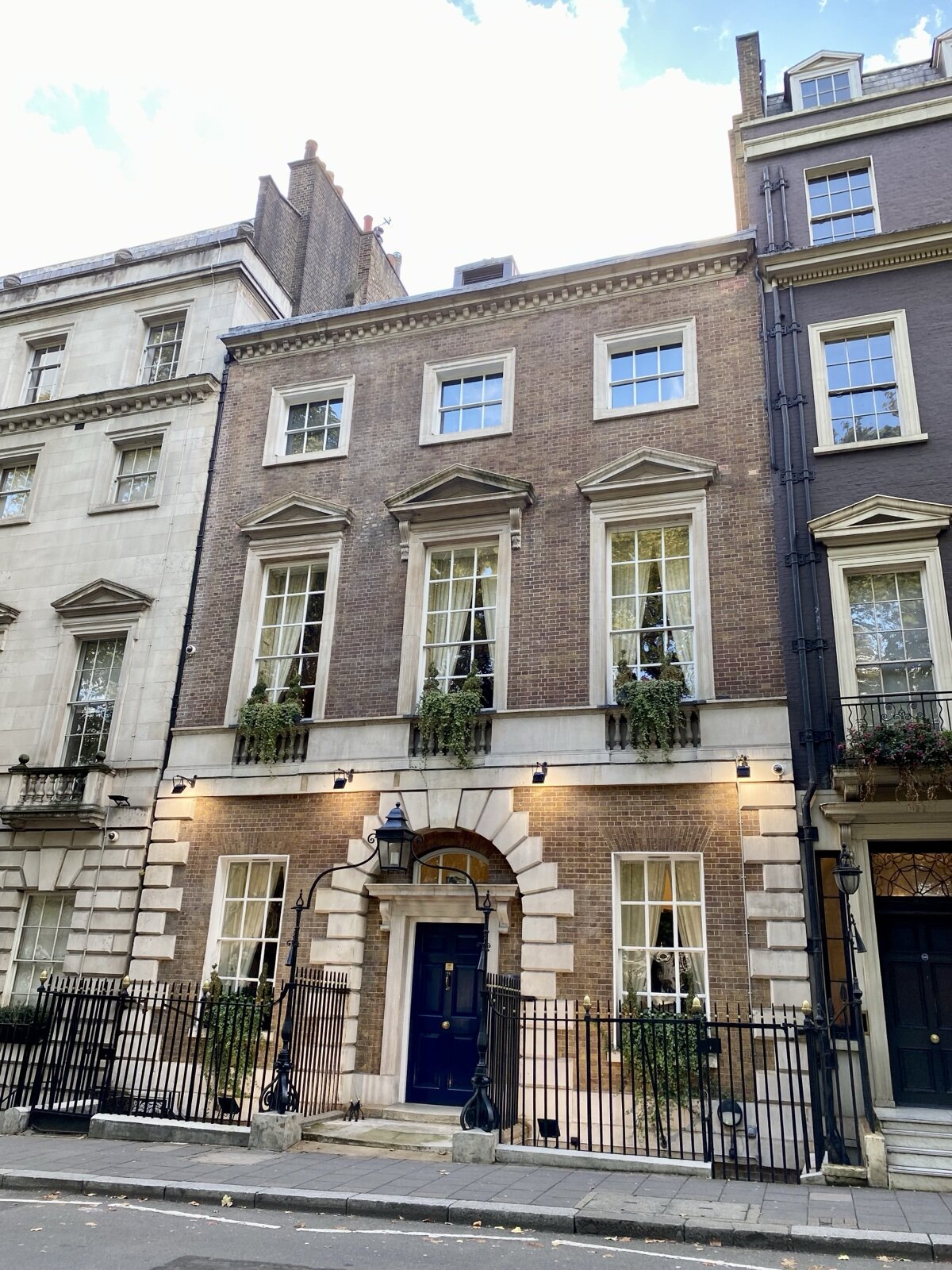
44 Berkeley Square, Mayfair. Photo: 44 Berkeley Square, Mayfair, November 2022 by No Swan So Fine (CC BY-SA 4.0), via Wikimedia Commons.
1. Fix the budget, including stamp duty
Stamp duty land tax is the largest single cost after the price itself, and at W1 values it is a serious number. The residential bands for someone buying their only home are:
- Up to 125,000 pounds: nil
- 125,001 to 250,000: 2 per cent
- 250,001 to 925,000: 5 per cent
- 925,001 to 1.5 million: 10 per cent
- Above 1.5 million: 12 per cent
On a 2 million pound purchase that works out at 153,750 pounds: nothing on the first 125,000, then 2,500, then 33,750, then 57,500, then 60,000 on the slice above 1.5 million.
Two surcharges then sit on top. If the purchase means you will own more than one residential property, you usually add 5 per cent of the whole price, which is another 100,000 pounds on 2 million. If you are not UK resident, meaning you have not been present in the UK for at least 183 days in the 12 months before the purchase, you add a further 2 per cent, or 40,000 pounds. A non-resident buying a second home at 2 million therefore pays 293,750 pounds rather than 153,750. Confirm the figure against the GOV.UK stamp duty rates before you commit, because these bands do move.
Budget separately for legal fees, a survey, search fees, a buying agent if you use one, and the Land Registry fee. On a leasehold flat, add the landlord's fees for any consents, which in W1 are rarely small.
2. Sort the ownership structure before you look
If you are buying through an overseas entity, register it with Companies House first. Overseas entities that want to buy, sell or transfer UK property must register and obtain an Overseas Entity ID to give to the Land Registry, and failing to comply can bring a fine, a prison sentence or both, as well as restrictions on buying, selling, leasing or charging the property. This is the single most common avoidable cause of a stalled prime central London completion.
Get the anti-money-laundering side ready at the same time. Solicitors and agents will want identity documents, proof of funds and, for larger purchases, a documented source of wealth. Assembling that after an offer is accepted wastes weeks.
3. Understand what tenure you are actually buying
Very little of W1 is a straightforward freehold house. Most flats are leasehold, and a great deal of the area sits under long-established estate landlords: Grosvenor across much of Mayfair, Howard de Walden and Portman across much of Marylebone. That shapes what you can do with the property far more than the price does.
Check four things on any leasehold purchase here:
- Unexpired term. GOV.UK's leasehold guidance is explicit that once 80 years or fewer remain, the cost of extending rises significantly. Price the extension before you offer.
- Ground rent and service charge. W1 mansion blocks with porters, lifts and plant can carry service charges that materially change the running cost. Ask for three years of accounts and any major works consultation notices.
- Alterations. Structural work, and often much less than that, needs a licence to alter from the landlord. Assume time and cost.
- Use and subletting. Many W1 leases restrict short lets or company occupation. If the plan is to let it, read this clause before you offer.
Our guide to what it costs to buy a flat in W1 covers the price side, and buying property in Mayfair goes deeper on that market specifically.
4. Search the right way
Prime central London has a substantial off-market layer, and the best stock in Mayfair and Marylebone often never reaches a portal. Register directly with the agents who dominate each street, and consider a buying agent if you are not in London or not familiar with the micro-geography. The difference between two sides of the same square, in light, noise and lease terms, is larger than the listings suggest.
Look at the same flat twice, at different times of day. Traffic, deliveries, bar closing times and the servicing of nearby hotels change some W1 streets completely between 11am and 11pm. Our guide to living in W1 and the Mayfair versus Marylebone comparison cover the character differences street by street.
5. Offer, survey, and the things that are actually found
Offers here are usually made subject to contract and survey. Commission a full building survey rather than a valuation, especially on a period house: W1 stock is largely Georgian and Victorian, much of it listed or in a conservation area, and the recurring findings are the expensive ones. Roof and parapet condition, historic movement, damp in lower ground floors, unauthorised past alterations, and services that have been patched rather than replaced.
Where the building is listed, unauthorised past alterations are a specific risk, because the liability travels with the building and not with whoever did the work. Ask the question directly and get it answered in writing.
6. Conveyancing, consents and the delays
Use a solicitor who does W1 work regularly. The searches are standard, but the estate landlord consents, the licence to alter, the head lease enquiries and the company or trust structures are not, and a firm that has not seen them before will add weeks.
The usual critical path on a prime central London purchase runs: anti-money-laundering clearance, overseas entity registration if relevant, leasehold enquiries and management pack, landlord consents, then exchange. Eight to twelve weeks is a realistic plan for a clean leasehold flat. Anything with a listed building consent, an unregistered overseas entity or a lease extension running in parallel takes longer, and pretending otherwise just moves the disappointment later.
7. After completion
File and pay the stamp duty return within the statutory deadline, register the title, and put the service charge and ground rent on standing orders. If the lease is short, start the extension straight away rather than waiting: the clock only runs one way, and the 80-year threshold is the point at which waiting gets expensive.
For everything else about the postcode, start from The W1 London homepage or the guide to what the W1 postcode actually covers.
Frequently asked questions
How much stamp duty do you pay on a 2 million pound house in London?
For a UK resident buying it as their only home, 153,750 pounds. The bands are nil to 125,000, then 2 per cent to 250,000, 5 per cent to 925,000, 10 per cent to 1.5 million and 12 per cent above that. If it is an additional property you add 5 per cent of the whole price, and if you are not UK resident you add a further 2 per cent, which on 2 million pounds is another 140,000.
What is the non-UK resident stamp duty surcharge?
A 2 per cent surcharge on residential purchases in England and Northern Ireland by buyers who are not UK resident, which for this purpose means not present in the UK for at least 183 days in the 12 months before the purchase. It stacks on top of the standard rates and on top of the 5 per cent additional property surcharge if that applies too.
Do I need to register an overseas company before buying?
Yes. Overseas entities that want to buy, sell or transfer UK property must register with Companies House and obtain an Overseas Entity ID to give to the Land Registry. Non-compliance carries a fine, a prison sentence or both, and restricts the entity from buying, selling, leasing or charging property. Start this early: it is a common cause of delay at exchange.
Is most Mayfair and Marylebone property leasehold?
Most flats are, and many houses are held on long leases from an estate landlord rather than freehold. The Grosvenor Estate holds much of Mayfair, and Howard de Walden and Portman hold large parts of Marylebone. The lease terms, alterations consents and permitted use all matter more here than the tenure label does.
Why does an 80-year lease matter?
Because the cost of extending rises sharply once a lease drops to 80 years or fewer, as GOV.UK's leasehold guidance sets out. A flat with 78 years left is a materially different asset from one with 95, even at the same asking price, so get the extension cost priced before you offer rather than after.
How long does a prime central London purchase take?
Plan for eight to twelve weeks from offer to completion on a straightforward flat, longer where there is a listed building, a licence to alter, an estate landlord consent, a company purchase or an overseas entity registration in the chain. Cash purchases are faster, but the consents and the anti-money-laundering checks are what usually set the pace, not the mortgage.
Sources
- GOV.UK, stamp duty land tax residential property rates and surcharges: gov.uk
- GOV.UK, register an overseas entity, and the Overseas Entity ID required by the Land Registry: gov.uk
Rates and rules checked on 24 August 2026. General information, not tax or legal advice; take your own before you commit.