
Mayfair Property Guide: Streets, Prices and What You Get
Any Mayfair property guide that leads with an average price is wasting your time. This is a square kilometre where a two-bedroom flat on a short lease and a freehold house on Charles Street are both "Mayfair", and the gap between them is not a matter of degree. What actually decides the price here is the lease, the freeholder, the street and the floor, roughly in that order. This page explains each of them, what the published data does and does not tell you, and the one piece of legislation every buyer of a Mayfair flat needs to understand before they exchange.
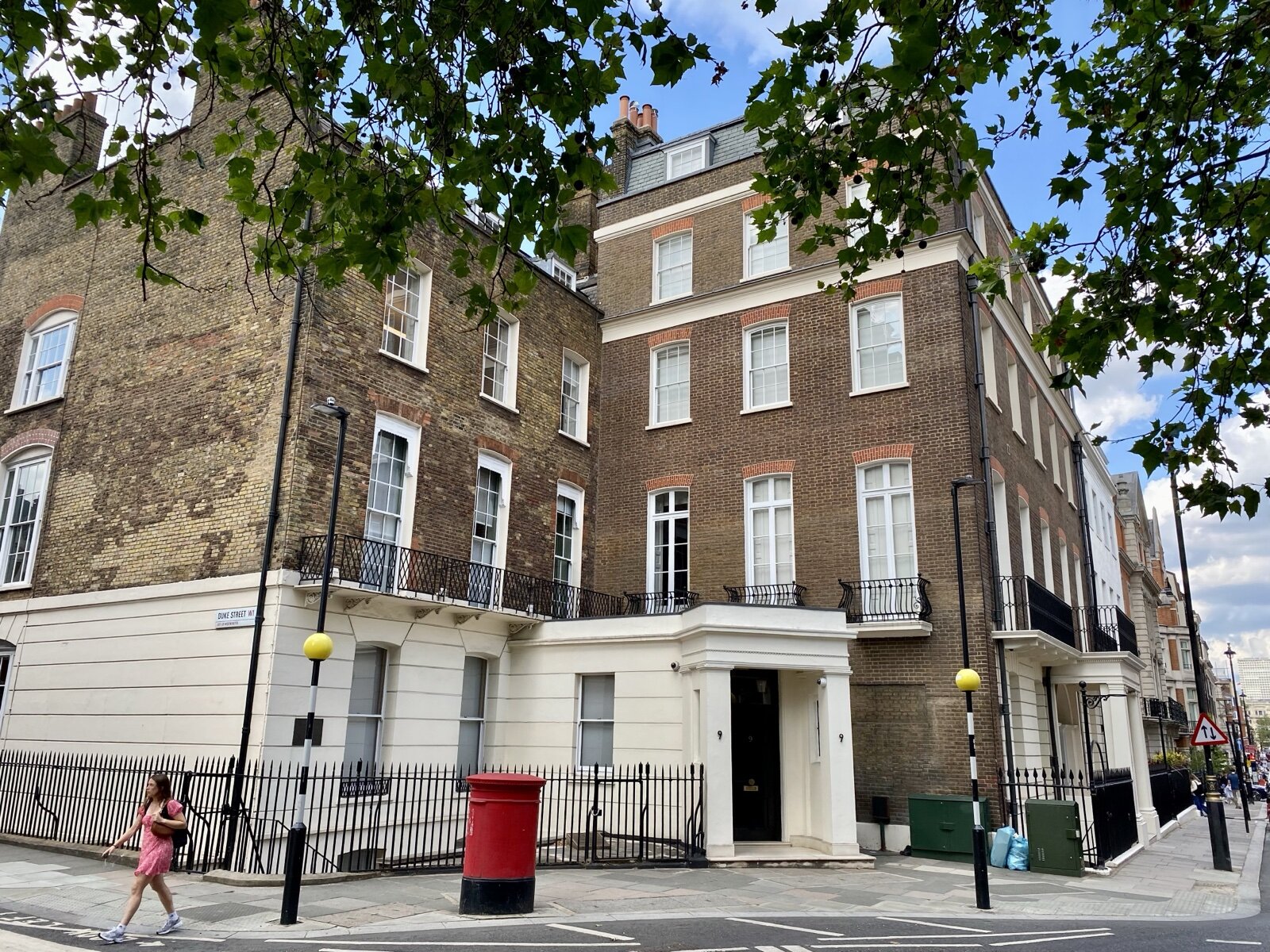
9 Grosvenor Square, Mayfair, June 2023 by No Swan So Fine (CC BY-SA 4.0), via Wikimedia Commons.
Who owns Mayfair
Most of it is not sold, it is let. The Grosvenor Estate has held land here since 1677, when the twelve-year-old heiress Mary Davies married Sir Thomas Grosvenor and brought with her the manor of Ebury, several hundred acres west of the City. The family, now headed by the Duke of Westminster, still holds roughly 300 acres across Mayfair and Belgravia and has never sold the core of it.
That single fact explains most of what a buyer here runs into. A great many Mayfair flats and houses are long leaseholds granted by an estate freeholder rather than freeholds. The estate sets the terms of alterations, controls the shopfronts and the street furniture, and has a long-term interest in the character of whole blocks rather than in individual transactions. It is why Mount Street looks the way it does, and why you cannot do what you like with a window.
Mayfair also sits almost entirely inside the Mayfair Conservation Area, administered by Westminster City Council, with a very high density of listed buildings. Between the estate covenants, conservation area rules and listed building consent, alteration here is a planning project, not a decorating decision.
Why the published price data is close to useless here
The Land Registry's UK House Price Index puts the average price in the City of Westminster at £854,198 for June 2026. That number tells you almost nothing about Mayfair. Westminster runs from Church Street to Belgravia, the borough's monthly average swings violently because the transaction count is small and a handful of very large sales move the mix, and the same index recorded a double-digit annual fall on that reading.
Use it as a reminder that borough averages are a mix measure, not a valuation. For Mayfair specifically, the only data worth looking at is Land Registry price paid for the individual street, ideally for the same building, and even then you have to adjust for lease length and floor. Two flats in the same mansion block with 40 years between their lease terms are not comparable properties.
Lease length is the price
This is the part people get wrong, and it is expensive.
A leasehold flat is a wasting asset. As the term runs down the value falls, slowly at first and then sharply. Below about 80 years the fall accelerates, because under the current valuation rules the leaseholder also has to pay the freeholder a share of "marriage value", the uplift created by joining the extended lease to the freehold. Short leases in Mayfair are common, because the estates have been granting and regranting terms here for three centuries, and they are the single biggest reason a Mayfair flat can look cheap.
Two changes matter right now, and they pull in different directions.
- Already in force. Since 31 January 2025, the two-year ownership requirement is gone. You no longer have to have owned the flat for two years before you can claim a statutory lease extension or join a freehold purchase. In practice that means a buyer can start the process immediately on completion, or have the seller serve notice and assign the benefit of it, instead of waiting two years while the lease shortens further.
- Not yet in force. The Leasehold and Freehold Reform Act 2024 provides for abolishing marriage value, and the High Court upheld the Act against a freeholders' challenge in October 2025. But the valuation provisions still require secondary legislation and the Government has been consulting on the rates, so extensions are still being valued under the 1993 Act, with marriage value payable below 80 years.
What that means in practice: do not assume the cheap short-lease flat becomes cheap to extend on a timetable you can rely on. Get a valuation for the extension premium under the current rules before you offer, and treat any future saving as a bonus rather than a plan.
The streets, and what each one is
Mayfair is not uniform. Four distinct characters sit inside it.
The Grosvenor spine: Grosvenor Square, Mount Street, South Audley Street, Upper Brook Street
The estate heartland and the most consistently valuable part of the district. Georgian and Victorian terraces, red terracotta on Mount Street, the largest garden square in Mayfair at its centre. Almost entirely leasehold, heavily managed, and the part of Mayfair that behaves most like a residential neighbourhood rather than an extension of Bond Street.
The Berkeley Square quarter: Charles Street, Hill Street, Farm Street, Bruton Street
The best of the surviving whole houses. Narrower streets, more intact Georgian frontages, some genuine freeholds, and a quieter feel than the Grosvenor blocks despite being a two-minute walk from a very busy square. Farm Street and Hill Street are where people who want a house rather than a flat usually end up looking.
The Park Lane edge
Purpose-built apartment blocks and hotel-branded residences, with Hyde Park on one side and six lanes of traffic between you and it. The views are the product. Ask specifically about which elevation the flat faces and what it looks over, because in these buildings the difference between a park view and a lightwell is the difference between two entirely different prices in the same block.
Shepherd Market and the Curzon Street end
The oldest-feeling corner, a pocket of small eighteenth-century buildings, narrow lanes, pubs and restaurants at ground level. Flats here are smaller and often above commercial premises, which affects both lending and service charges. It is the most characterful part of Mayfair and the least like the rest of it.
The eastern edge: Albemarle Street, Dover Street, Old Bond Street
Predominantly commercial, galleries and offices with residential above. Buy here for the location rather than for the residential amenity, and check what the neighbouring uses are before you commit, because a gallery loading bay is a different neighbour from a family house.
The running costs nobody quotes you
The purchase price is the smaller half of the conversation at this level.
- Service charge. In a staffed mansion block or a branded residence this can run into tens of thousands a year, and it is not optional. Ask for three years of accounts, not a headline figure, and ask what is in the reserve fund.
- Ground rent. Check the review clause, not the current figure. A rent that doubles on a fixed cycle can make a flat unmortgageable long before the term gets short.
- Major works. Ask for the last five years of section 20 consultations and any planned works. A roof or a facade on a listed Mayfair building is a very large number shared between very few flats.
- Council tax and the empty homes premium. Westminster applies a premium to long-term empty properties, which matters if you are buying a pied-a-terre you will use a few weeks a year.
- Stamp duty. The rate on the slice above £1.5 million is 12%. An additional property adds 5% on top of every band, and a non-UK resident buyer adds a further 2%. On Mayfair prices those surcharges are not a rounding error, and the non-resident test is about days present in the UK, not nationality.
What to check before you offer
- Lease length and the extension premium. Get a specialist valuation before you offer, not after. Under 80 years, ask what marriage value adds today.
- Who the freeholder is, and whether it is an estate with alteration covenants. Ask the managing agent what consents have been refused in the building.
- Listing and conservation status. Search the address on Historic England's National Heritage List for England, then check Westminster's planning register for the building's application history.
- Building control history. Unauthorised alterations in a listed Mayfair building are a liability that transfers to you.
- Price paid on the street. Land Registry data by address, adjusted for lease and floor, beats any agent's guide price.
- Lettability, if that matters. Short-let restrictions are common in both the leases and the estate covenants, and London has a 90-night annual limit on short lets of an entire home without planning permission.
Frequently asked questions
Is Mayfair a good place to live?
It suits a particular life. You get the best-managed streets in central London, Hyde Park at one end, and the highest concentration of restaurants and galleries in the country. What you do not get is a supermarket culture, much of a school-run community, or quiet on the Bond Street side. People who love it tend to be there for a few days a week or for the walk to work; families more often end up in Marylebone or further west.
Is Mayfair property leasehold or freehold?
Mostly leasehold. The Grosvenor Estate has held land here since 1677 and still holds around 300 acres across Mayfair and Belgravia, granting long leases rather than selling. Freehold houses do exist, particularly around Charles Street, Hill Street and Farm Street, and they carry a substantial premium precisely because they are scarce.
What is the average property price in Mayfair?
There is no reliable single figure, and any that is quoted should be treated with suspicion. The Land Registry publishes an average of £854,198 for the whole City of Westminster in June 2026, but that borough covers everything from Church Street to Belgravia and swings sharply month to month because the sample is small. For Mayfair, look at Land Registry price paid for the specific street and adjust for lease length and floor.
Why are some Mayfair flats so cheap?
Almost always the lease. Below about 80 years a leasehold flat loses value quickly, because extending it currently means paying the freeholder marriage value on top of the premium. A flat that looks like a bargain for the postcode usually has a short term, a punitive ground rent review, or a large forthcoming service charge liability. Price the extension before you price the flat.
Has the leasehold reform changed lease extensions yet?
Partly. Since 31 January 2025 you no longer need to have owned the property for two years before claiming a statutory lease extension or a freehold purchase, which is a real and immediate benefit to buyers. The abolition of marriage value in the Leasehold and Freehold Reform Act 2024 was upheld in the High Court in October 2025 but the valuation provisions are not yet in force, so extensions are still valued under the 1993 rules. Do not buy on the assumption that a cheaper extension is arriving by a particular date.
How much stamp duty do you pay on a Mayfair property?
Residential SDLT runs at 0% to £125,000, 2% to £250,000, 5% to £925,000, 10% to £1.5 million and 12% above that. If the purchase means you will own more than one residential property, add 5% to every band. If you have not been in the UK for at least 183 days in the relevant 12 months, add a further 2%. At Mayfair prices those two surcharges together can add a seven-figure sum.
Where to look next
Walk the streets before you shortlist anything, because the character changes completely in two hundred metres and no floorplan tells you that. Our Mayfair area guide covers the district itself, the best restaurants in Mayfair covers what is on the doorstep, and the W1 London homepage is the starting point for the rest of the postcode. For the legal position on any specific lease, take advice from an enfranchisement specialist rather than a general conveyancer.