
How to pick a house style, book the consultation, and move from measuring to a finished bespoke suit
Start the GuideYou have read the price guide, set the budget and decided that a bespoke suit is worth it. The next question is the one most first time clients find harder than the cost: which tailor, and what actually happens once you walk through the door. A first commission on Savile Row is not a single appointment. It is a relationship that runs across roughly three months, several fittings and one paper pattern cut for you alone.
This guide picks up where the money stops. It covers how to choose between the famous house styles, how to book an initial consultation, and the full timeline from the first measuring session through the basted fittings to the garment you collect. It also covers the small etiquette that makes a first visit easy rather than intimidating, because nobody is born knowing how a fitting works.
If you are still weighing the spend, start with our companion piece, How Much Does a Savile Row Suit Cost? A 2026 Bespoke Tailoring Price Guide. This page assumes you have made that call and want to know how to commission well.
A first Savile Row commission typically takes eight to twelve weeks from consultation to collection. Expect a consultation of up to two hours, around thirty measurements taken across your body, and two to four fittings spaced roughly two to three weeks apart. The Savile Row Bespoke Association sets a minimum of around fifty hours of hand work and an individually cut paper pattern for a garment to count as true bespoke.
Pick the cut before you pick the cloth, because the house style shapes everything
The defining soft silhouette on the Row is the English drape, associated above all with Anderson and Sheppard. It uses lightly padded, rounded shoulders, a high armhole for movement, and a full chest with a gentle vertical drape that suppresses into the waist. The look is relaxed and forgiving, flattering on a slimmer or average frame, and comfortable to move in. It reads as understated rather than sharp.
This style traces to the cutter Frederick Scholte, whose soft tailoring for the Duke of Windsor became the basis of the London cut. Choose it if you want a suit that looks at ease and lets you forget you are wearing tailoring.
At the firmer end sits Huntsman, founded in 1849 and known for a strong, defined shoulder, a single button fastening and a nipped waist with a slightly flared skirt that nods to its riding coat heritage. The result is a sharp, upright, X shaped line that creates structure on the body. It suits a man who wants the suit to do some of the work and project formality.
Between the two poles sits Henry Poole and Co, the oldest surviving bespoke house on the Row, trading since 1806 and built on balance and proportion rather than a single dramatic signature. It is a sound first choice if you are unsure where your taste falls, because the cut adapts to the wearer rather than imposing a strong house look.
Other notable houses carry their own character. Gieves and Hawkes, at No.1 Savile Row, grew out of military and naval tailoring and still makes uniforms there. Dege and Skinner, established in 1865, is known for a strong shoulder and the narrow cavalry cut trouser drawn from its own military heritage. It pays to see a few before settling on one.
You do not need an introduction or a referral to commission a suit on Savile Row. Each house takes appointments directly, by phone or email through its own website, and welcomes first time clients. The opening meeting is a consultation, not a measuring session that commits you to anything, so it is worth booking with more than one house before you choose.
Allow up to two hours for a first appointment. The cutter will ask how you see the suit and what it is for, since a once a year evening suit is cut differently from a daily business suit. Expect questions about your work, how much you travel, the climate you wear it in, and how you move through a normal day. None of this is small talk. It tells the cutter how to shape the garment around your life.
You will also choose the cloth, often from thousands of swatches, and settle the details that define the suit: single or double breasted, the number of buttons, lapel width and shape, pocket style, vents, trouser pleats or a flat front, and turn ups. A good cutter will steer you away from choices that fight the house cut or your frame, and toward ones that last beyond a single season.
From the first measurement to the suit you collect, typically across eight to twelve weeks
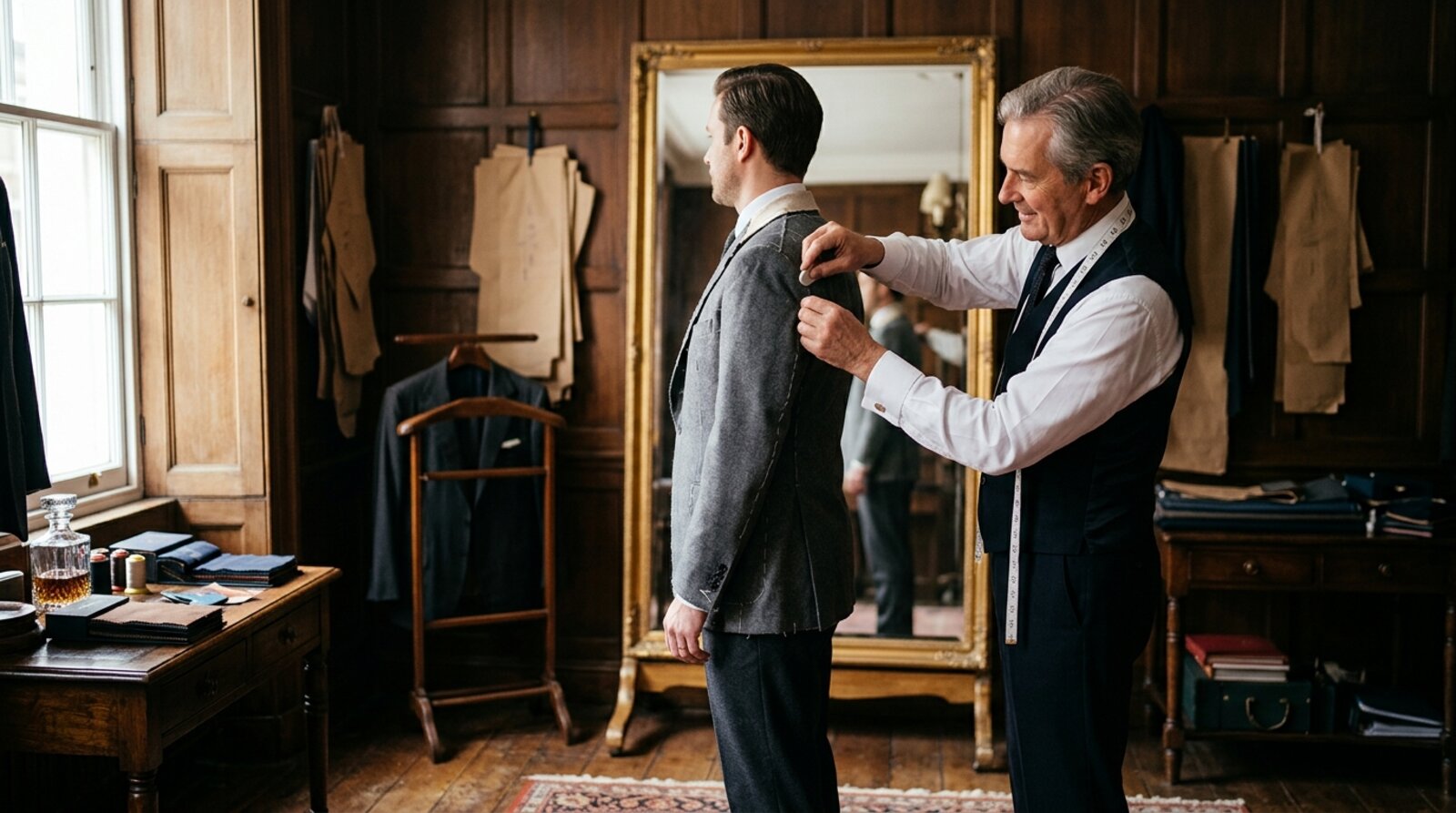
At the first session the cutter takes around thirty measurements, and some take more, recording not just length and girth but the quirks of your figure, posture and stance. You will be asked to stand naturally and look away from the mirror, because most people stiffen and straighten when they watch themselves. From those figures the cutter drafts a paper pattern cut for you alone, the document that makes the suit bespoke.
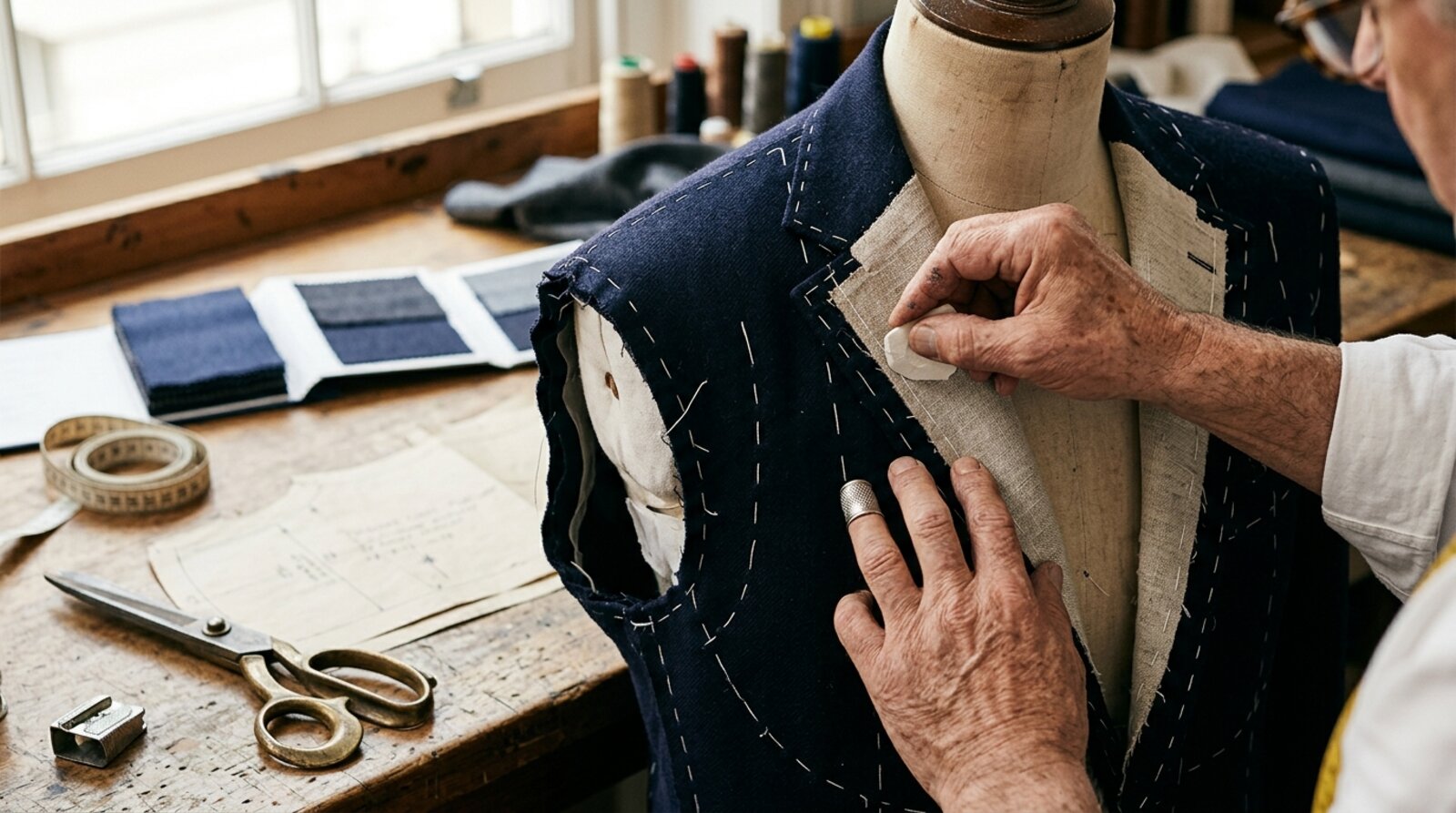
Two to three weeks later comes the basted fitting, the most important appointment of the whole process. The suit arrives half made and held together with loose white basting stitches, the canvas floating inside and the sleeves and collar tacked on. It looks rough on purpose. The cutter studies the balance, shoulders and chest on your body, chalks the changes, then has the garment taken apart and recut.
At the next fitting the suit is far more finished. The front edges are in place, the linings are going in, and the true silhouette appears for the first time, whether that is a soft draped chest or a structured shoulder. Smaller refinements are noted here: sleeve length, the set of the collar, the close of the waist. A first commission, or an unusual figure, may need an extra fitting at this stage.
The final fitting is on the near complete suit, with hand finished buttonholes and the interior work done. The cutter confirms the fit, makes any last adjustment and gives care advice. A hand sewn suit settles and drops in as you wear it, so it grows more comfortable over the first weeks. From here your pattern is kept on file, and future orders need fewer fittings because the hard work is done.
Repeat clients sometimes order from an existing pattern with a single fitting. A first commission needs the full sequence because the cutter is building your personal pattern from scratch and watching how the cloth behaves on you. Treat the timeline as part of the product, not a delay. The fittings are where an off the peg shape becomes a suit that is unmistakably yours.
You do not need to bring measurements, sketches or another suit to copy. The cutter takes everything in the room, and a vague brief in your own words is more useful than a borrowed spec sheet.
There is no dress code for a fitting, but arrive in something close to how the suit will be worn, so a normal shirt rather than a heavy jumper. During measuring, stand as you naturally do and resist the urge to hold yourself upright. The cutter is fitting the real you, not a posed version, and an honest stance gives a better suit.
A first fitting can feel exposing because the suit looks unfinished and you are being studied closely. That is normal. A few points make it easier:
An off the peg suit is finished before you see it and altered to fit. Made to measure adjusts a standard block to your figures. Bespoke starts with a pattern cut for you and built up through fittings, largely by hand. That is the difference you are paying for, and the fittings are where it is earned.
To plan the rest of a day on the Row, see our W1 luxury shopping guide and our wider Mayfair guide.
A first commission usually takes about eight to twelve weeks from the initial consultation to collection. The Savile Row Bespoke Association describes a typical process as roughly three months, built around an individually cut paper pattern, a minimum of around fifty hours of hand work and a series of fittings. A first suit often needs more fittings than later orders, because the cutter is creating your pattern for the first time.
Most houses work to two to four fittings for a first commission. The classic sequence is a basted fitting, a forward or second fitting once the garment is more complete, and a finish fitting on the near final suit, spaced roughly two to three weeks apart. A tricky figure or a brand new pattern can call for an extra fitting.
Choose by house style rather than by name alone. Anderson and Sheppard is known for the soft, draped English cut, while Huntsman is known for a structured, strong shouldered, one button silhouette. Henry Poole sits between the two. Visit two or three houses, look at finished garments in the shop, and pick the cutter whose natural cut suits your build and how you want to look.
Bring the shoes you intend to wear with the suit, since heel height affects how the trousers are finished, and wear a shirt similar to the one you will pair with it. Bring any reference images or notes on the occasion the suit is for. You do not need measurements or sketches, because the cutter takes everything in the room. Allow up to two hours for the first appointment.
Off the peg is a finished suit you alter to fit. Made to measure adjusts a pre existing block pattern to your figures. Bespoke on Savile Row begins with a paper pattern cut individually for you, made up through several fittings and largely sewn by hand. The Savile Row Bespoke Association sets a minimum of around fifty hours of hand work and a series of fittings for a garment to count as bespoke.
A basted fitting is the first fitting of a bespoke suit, where the garment is only loosely held together with white basting stitches rather than finished. The cutter assesses the balance, shoulders and chest on your body, marks changes in chalk, then has the suit taken apart and recut before the next stage. It looks rough and unfinished by design, and is the most important fitting for getting the shape right.
For the official definition of bespoke and the houses behind it, see the Savile Row Bespoke Association, and read our 2026 Savile Row suit cost guide for the full pricing picture before you commission.
The full guide to London's most exclusive neighbourhood, home to Savile Row and Bond Street
Explore Mayfair →Where to spend the rest of a day on the Row, from shirtmakers to shoes
Browse the Guide →Discover the village atmosphere and refined style of Marylebone
Explore Marylebone →Return to our W1 London homepage for an overview of all districts, or contact us at advertise@thew1london.com for business enquiries.