
Home › Guides
Is Mayfair a Good Place to Live? The Tax, Lease and Service Charge Questions Answered
Is Mayfair a good place to live, or is it an address people buy and then barely use? The honest answer is that W1 is one of the easiest parts of London to live in and one of the most awkward to own in, and the gap between those two things has widened in the last two years. Here are the practical questions people ask before they buy or rent in Mayfair, Marylebone, Fitzrovia and Soho, with the actual numbers.
_01.jpg)
The council tax answer surprises people
Westminster charges the lowest council tax in England, and it is not close. For 2026/27 the Band D total across most of the borough is £1,047.85: £537.34 to the council and £510.51 to the Greater London Authority. Band H, which a good deal of W1 housing sits in, comes to £2,095.70 for the year. A Band H house in Mayfair therefore pays less council tax than a Band D semi in much of the country.
Two exceptions sit inside the borough. Queen's Park has its own community council precept, £52.31 at Band D, taking the total to £1,100.16. Montpelier Square has a much larger precept, £550.85 at Band D, which pushes it to £1,598.70.
The catch is what happens if you are not living there. Westminster brought in a 100% second home premium on 1 April 2025, so a property that is nobody's sole or main residence pays twice. Long-term empty homes are treated harder still: a 100% premium after twelve months, 200% after five years, and 300% after ten. For a borough where a significant slice of the stock has historically been occupied for a few weeks a year, that is a deliberate change of direction.
Stamp duty at W1 prices
Since 1 April 2025 the residential thresholds have been back at their pre-2022 levels. The bands for a single main residence are:
| Portion of the price | Rate |
|---|---|
| Up to £125,000 | 0% |
| £125,001 to £250,000 | 2% |
| £250,001 to £925,000 | 5% |
| £925,001 to £1.5m | 10% |
| Above £1.5m | 12% |
Then the surcharges. An additional residential property carries 5% on top of every band, unless you are replacing your main residence within 36 months. A non-UK resident buyer, defined as someone present in the UK for fewer than 183 days in the preceding twelve months, pays a further 2%. First-time buyer relief exists but stops entirely above £500,000, so in W1 it is academic.
The practical effect is that the tax on a W1 purchase is rarely a rounding error. Stack the additional-property and non-resident surcharges on a flat priced in the millions and the top slice is taxed at 19%. That is the single biggest reason W1 transactions move slowly compared with the rest of central London. Our page on the cost of buying a flat in W1 goes through the rest of the purchase costs.
Leasehold, and the great estates
Almost everything residential in W1 is leasehold, and a large part of it sits on estates where one landlord holds the freehold of whole streets: Grosvenor in Mayfair, Howard de Walden in Marylebone, the Crown Estate in parts of Regent Street and St James's. That has upsides, including a consistency of shopfronts and upkeep you do not get where freeholds are fragmented, and one obvious downside, which is that your lease terms are set by an institution rather than negotiated.
The law changed in your favour on 31 January 2025. Section 27 of the Leasehold and Freehold Reform Act 2024 came into force that day, abolishing the two-year ownership requirement for statutory lease extension claims and for claims to buy the freehold. You can now start the process as soon as you are the registered proprietor at the Land Registry, which matters in a market where short leases trade at a steep discount and a buyer previously had to sit on the problem for two years before fixing it.
What has not changed is that lease length still drives value. Below about 80 years, marriage value enters the valuation and the premium climbs sharply. If you are looking at a W1 flat priced suspiciously well, check the unexpired term first and everything else second.
Service charges, and the question to ask
W1 mansion blocks come with porters, lifts, communal heating and period roofs, and all of that is paid for through the service charge. There is no meaningful average figure, and anyone quoting one is guessing.
The useful diligence is not the annual number. Ask for:
- The last three years of certified service charge accounts, not the budget.
- The current reserve fund balance.
- Any Section 20 consultation notices issued or expected, which is the statutory process a landlord must follow before major works above a threshold.
- The date of the last roof, lift and communal boiler renewal.
A block with a modest charge and no reserve is carrying a bill that has simply not arrived yet. A block with a higher charge and a properly funded reserve is usually the cheaper purchase over ten years.
So which part of W1 should you actually live in
Mayfair is the quietest and the most formal. Its problem as a place to live is that it is not very residential: the ground floors are galleries, offices, hotels and restaurants, and it thins out in the evening. Good if you want an address and silence; less good if you want a chemist. Our Mayfair guide covers the streets in detail, and why Mayfair is so expensive explains the pricing.
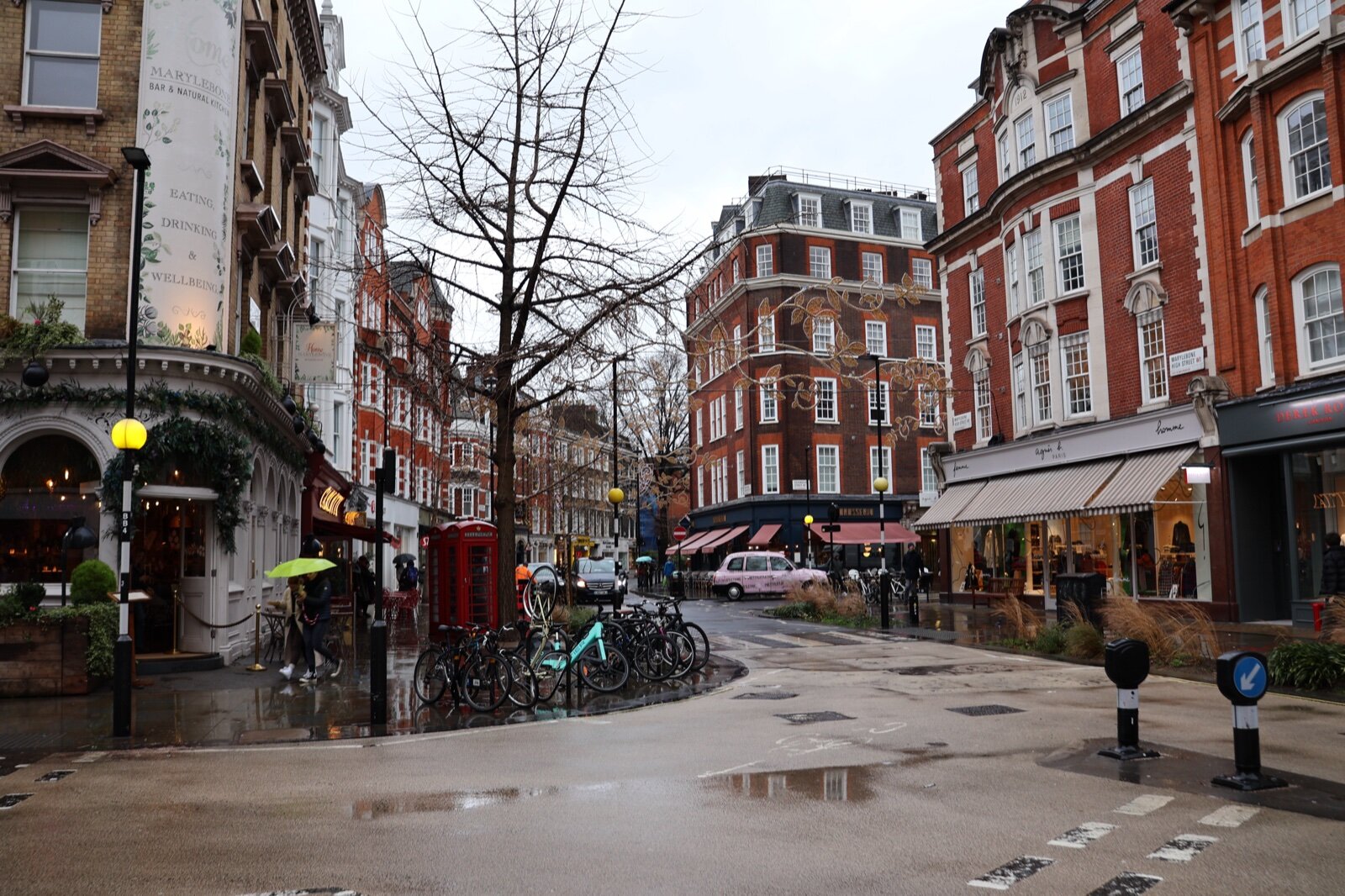
Marylebone is the one people move to and stay in. It has a functioning high street with food shops, cafés, a cinema and GP surgeries, and the mansion blocks north of Marylebone Road give it more genuine residential density than Mayfair has.
Fitzrovia is the value option inside W1: mixed, busy, central, and cheaper per square foot than either of the above, with the trade-off that the streets are noisier and the building stock more varied.
Soho is a place to live only if you actively want to live above a night out. It is wonderful and it is loud until three in the morning, and no amount of glazing changes that.
Renting instead
Renting removes the stamp duty problem and the lease problem in one move, which is why a lot of people who work in W1 rent there and own somewhere else. The variables that matter are furnished versus unfurnished, whether the service charge is included, and whether the block permits short lets, because a building full of holiday lets is a different place to live from a building full of residents. Our guide to the cost of renting in W1 has the current picture, and the W1 London home page links the neighbourhood guides.
Frequently Asked Questions
Is Mayfair a good place to live?
It depends entirely on whether it is your only home. For a full-time resident it is quiet at night, walkable to almost everything in central London, and sits in the cheapest council tax area in England. For a second home it is now expensive in a new way: Westminster applies a 100% second home premium, introduced on 1 April 2025, so a pied-à-terre pays double.
How much is council tax in Mayfair?
For 2026/27 the Band D charge across most of Westminster is £1,047.85, made up of £537.34 for the council and £510.51 for the Greater London Authority. Band H, which covers a lot of W1 housing stock, is £2,095.70. Queen's Park and Montpelier Square add their own small precepts on top.
What stamp duty will I pay on a W1 flat?
Standard residential rates since 1 April 2025 are nothing up to £125,000, 2% to £250,000, 5% to £925,000, 10% to £1.5m and 12% above that. Add 5% across the board if it is an additional property, and a further 2% if you are non-UK resident, meaning under 183 days in the UK in the preceding twelve months. At W1 prices almost every purchase reaches the 12% band.
Are W1 flats leasehold or freehold?
Overwhelmingly leasehold, and a large share sit on the great estates, where the freehold of whole streets is held by a single landlord. That makes the lease length and the ground rent more important than in most of London. Since 31 January 2025 you no longer have to have owned the flat for two years before starting a statutory lease extension or freehold claim.
What do service charges cost in a W1 mansion block?
There is no single figure, because a porter, a lift, a communal boiler and a period roof cost what they cost. The useful question is not the annual number but the reserve fund: ask for the last three years of accounts, the current reserve balance and any Section 20 major works consultation notices. A low charge with an empty reserve is a bill you have not received yet.
Is Marylebone better than Mayfair to live in?
For daily life, many people say yes. Marylebone has a working high street with a food shop, a chemist and a GP surgery, which Mayfair largely does not; Mayfair has more offices, hotels and galleries, so it empties in the evening. Fitzrovia sits between the two and is cheaper. The trade-off is straightforward: Mayfair for address and quiet, Marylebone for actually living there.
Sources
- Westminster City Council, Council Tax bands and charges: the 2026/27 band figures, the Queen's Park and Montpelier Square precepts, and the second home and long-term empty premiums.
- GOV.UK, Stamp Duty Land Tax residential rates: the bands from 1 April 2025, the 5% additional property surcharge and the 2% non-UK resident surcharge.