
Home › Guides
Why Is Mayfair So Expensive? Six Reasons, and the One That Matters Most
Why is Mayfair so expensive? Start with the number: Rightmove recorded an overall average sale price of £3,831,177 in Mayfair over the year to mid-September 2026, with terraced houses averaging £7,150,000 and flats £3,437,065. That is not a London premium, it is a different market. The reasons are more specific than prestige, and one of them has been in place since 1677.
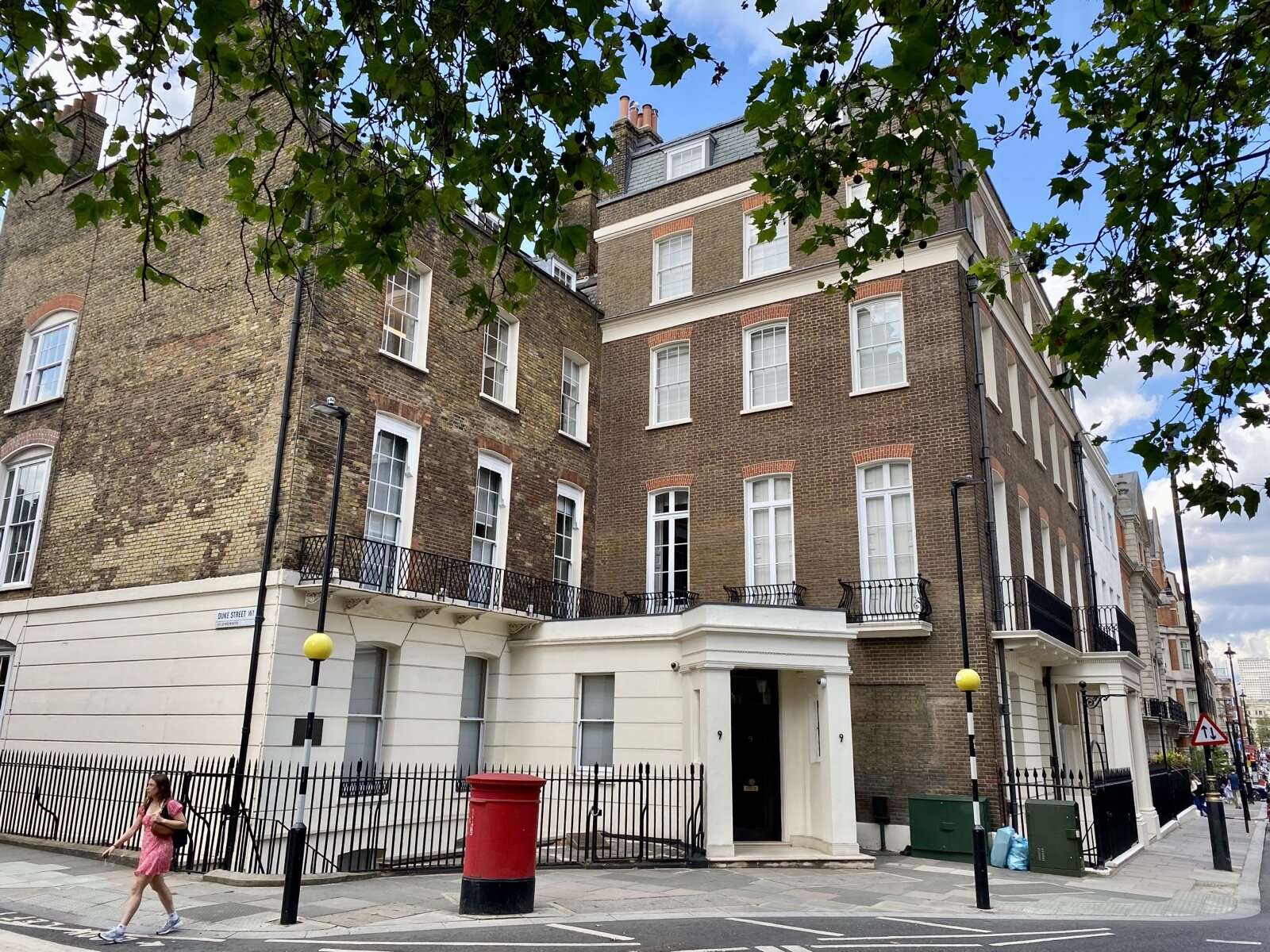

1. There is almost no residential Mayfair
Mayfair is small, bounded by Oxford Street, Regent Street, Piccadilly and Park Lane, and most of its floorspace is not homes. Offices, hedge funds, galleries, hotels, embassies, private members' clubs and shops occupy the majority of the buildings. What is left as residential is a fraction of a square mile in a city of nine million people.
Scarcity is not an abstraction here. In any given month the number of genuinely good flats for sale in Mayfair can be counted on two hands. When supply is that thin, the price is set by whoever wants it most, not by a market average.
2. One landlord, since 1677
This is the structural answer, and the one most explanations skip. The Grosvenor Estate holds roughly 100 acres of Mayfair as freeholder, alongside around 200 acres of Belgravia. The holding dates to the 1677 marriage of Mary Davies, heiress to the manor of Ebury, and Sir Thomas Grosvenor. The land sat largely undeveloped until the 1720s, when the family laid out the northern part around Grosvenor Square. Belgravia followed a century later.
Three centuries of single ownership produced something no modern developer can replicate: a coherent street plan, consistent building lines, garden squares kept as gardens, and an estate with both the power and the financial incentive to refuse anything that would cheapen the whole. Grosvenor's own records put the number of listed buildings across Mayfair and Belgravia at more than 1,500.
It also means most Mayfair homes are leasehold. Lease length is a major component of value, and works of any significance need the estate's consent, a licence to alter, as well as council permission.
3. Three layers of consent before you can change anything
Mayfair sits inside a Westminster conservation area, holds one of the highest concentrations of listed buildings in London, and is largely held on leases carrying estate management schemes. A buyer who wants to open up a floor plan, replace windows or add plant on a roof typically needs Westminster planning permission, listed building consent where the building is listed, and the freeholder's licence to alter.
Each layer adds time, professional fees and risk. That cost is priced into the asset, and it is one reason finished, consented, recently refurbished properties command so large a premium over the ones that need work.
4. New supply is effectively capped
You cannot build a tower in Mayfair, you cannot demolish much, and you cannot easily convert commercial to residential at scale. The handful of genuinely new residential schemes, mostly around Grosvenor Square, are therefore competing for an unusually deep pool of buyers with very few alternatives, which is why the per-square-foot records are set there rather than in the older stock.
Every other part of London can absorb demand by building more. Mayfair cannot, by design.
5. The demand is global, not local
Mayfair buyers are frequently not buying a home in the ordinary sense. They are buying a London base, a recognisable address, or an asset held in a stable jurisdiction. That demand does not track UK wages, UK mortgage rates or the domestic economic cycle in the way the rest of the market does, which is why prime central London can hold up when the wider market softens, and stall when it rises.
It also makes the market lumpy. A single £20m sale moves a monthly average.
6. What the money actually buys, practically
Within a ten minute walk: Hyde Park, the Royal Academy, the Bond Street galleries and auction houses, a dense cluster of Michelin-starred restaurants, the Elizabeth line at Bond Street, and the private clubs that are much of the reason the area's office rents are what they are. Very few places in the world put that within one postcode. For a fuller picture of the neighbourhood itself, see our Mayfair area guide.
Is it actually the most expensive place in London?
By average sale price Mayfair is at the top of the table, along with Knightsbridge and parts of Belgravia and Chelsea. By price per square foot the very top of the market is a small number of new-build schemes rather than a whole district. And there are individual streets elsewhere in London, notably in Kensington and St John's Wood, where houses sell for more than most of Mayfair.
The Monopoly board did not invent the reputation, but it has kept it alive: Mayfair has been the most expensive square, at £400, since the British edition appeared in 1936.
If you are actually buying
Three things decide whether a Mayfair purchase goes well.
- The lease. Check the unexpired term and the estate's policy on extensions before you fall in love with the drawing room.
- The consents. Establish what has already been approved and what would need three separate permissions.
- The building, not the street. Service charges, plant, lift, porterage and the state of the roof vary enormously between blocks on the same square.
Our guides to what it costs to buy a flat in W1 and Mayfair vs Marylebone for living go into the practical detail.
Frequently Asked Questions
What is the average house price in Mayfair?
Rightmove put the overall average sale price in Mayfair at £3,831,177 over the year to mid-September 2026. Flats averaged £3,437,065, semi-detached homes £6,258,097 and terraced houses £7,150,000. Averages in a market this thin move sharply with a handful of large sales.
Who owns Mayfair?
No single owner, but one dominant one. The Grosvenor Estate, the Duke of Westminster's family business, holds roughly 100 acres of Mayfair and around 200 acres of Belgravia as freeholder, a position that dates back to the marriage of Mary Davies and Sir Thomas Grosvenor in 1677.
Is property in Mayfair freehold or leasehold?
Most residential property in Mayfair is leasehold, with Grosvenor or another great estate as the freeholder. That matters for buyers: lease length drives value, and significant alterations usually need the estate's consent, a licence to alter, on top of council planning permission.
Why is Mayfair more expensive than Marylebone?
Scarcity, mostly. Mayfair has less residential stock, a higher share of it is listed, and it is closer to the private members' clubs, galleries and financial offices that drive demand. Marylebone has more family housing and a livelier high street, which is why plenty of people choose it over Mayfair on purpose.
Are Mayfair prices still rising?
Not uniformly. Prime central London has been a two-speed market, with best-in-class new developments around Grosvenor Square achieving record figures while ordinary resale flats with short leases or dated interiors move slowly. Headline records and the average paid are telling different stories.
Is Mayfair worth it as an investment?
It is a capital preservation play rather than a yield play. Rental yields in Mayfair are among the lowest in London because the capital values are so high. What buyers are paying for is a supply-constrained asset in a globally recognised location, not income.
Sources
- Rightmove, Mayfair house prices: average sale prices by property type for the year to September 2026.
- Grosvenor, our history: the 1677 marriage, the development of Mayfair from the 1720s, and the listed building count across Mayfair and Belgravia.