
Living in W1: Property and Life in Central London
Living in central London W1 means being at the very centre of the city, within walking distance of Oxford Street, the West End, Soho's restaurants and the green calm of Regent's Park. The W1 postcode is small, prestigious and expensive, but it is also more varied than its reputation suggests, spanning grand Mayfair, village-like Marylebone, understated Fitzrovia and the buzz of Soho. This guide sets out what each area is like to live in, the kinds of homes you will find, and the realities of cost and daily life.
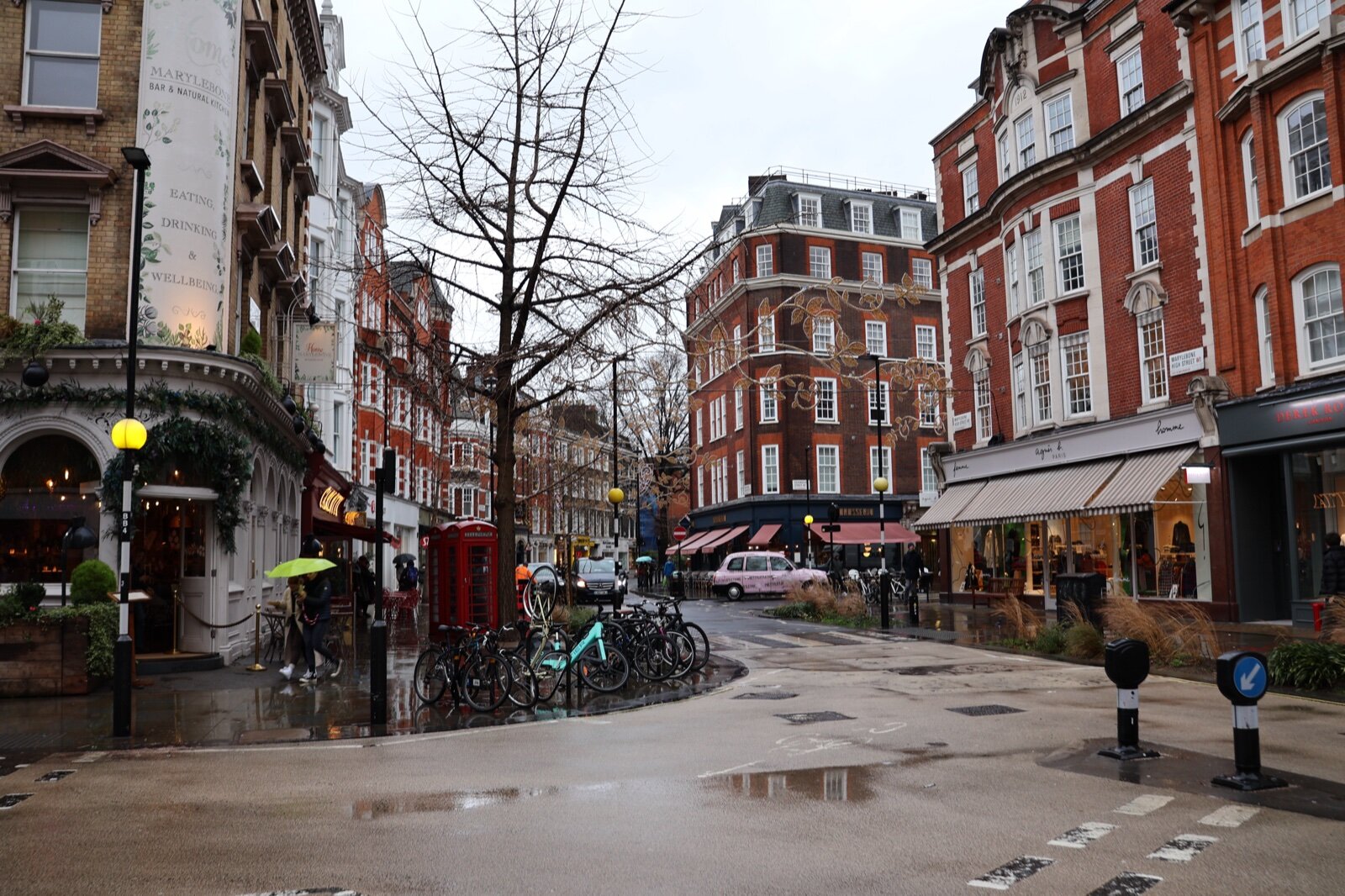
Marylebone High Street, in the heart of W1. Photo: DiscoA340 (CC BY-SA 4.0), via Wikimedia Commons.
The four faces of W1
W1 is really four neighbourhoods in one postcode. Mayfair, south of Oxford Street, is the grandest: Georgian townhouses, garden squares, luxury retail and hushed streets. Marylebone, to the north, has a relaxed, village feel built around its High Street, Daunt Books and the Wallace Collection. Fitzrovia, east towards Tottenham Court Road, is quietly creative, full of media offices, restaurants and mansion flats. Soho is the liveliest, a compact grid of bars, theatres and eating places that never quite sleeps. Where you choose depends entirely on the pace of life you want.
What the homes are like
Housing in W1 is overwhelmingly flats rather than houses. Expect period mansion blocks with porters, Georgian and Victorian conversions, mews houses tucked behind the main streets, and a smaller number of high-specification new-build apartments. True family houses are rare and command a premium, concentrated in Mayfair and the quieter Marylebone streets. Many blocks are leasehold with service charges that cover porterage, lifts and upkeep, an ongoing cost to weigh alongside the purchase price.
The cost of living here
There is no getting around it: W1 is one of the most expensive places to live in Britain. Flats commonly start from around a million pounds and rise sharply in prime Mayfair, while rents sit well above the London average. Set against that, day-to-day life can be walked rather than commuted, and you are buying location above all, the centre of London on your doorstep. For a closer look at one area, see our Marylebone guide and Mayfair guide.
Daily life and getting around
Transport is a real advantage. The Elizabeth line calls at Bond Street and Tottenham Court Road, and Oxford Circus, Marble Arch, Baker Street and Great Portland Street ring the district, so the rest of London is minutes away and much of the centre is walkable. Green space comes from Regent's Park to the north and pocket gardens like Paddington Street Gardens, and everyday needs are covered by Marylebone High Street, Soho's food shops and the Marylebone farmers' market. When it comes to eating out, few postcodes can match it: our where to eat in W1 guide covers the best of it.
Who W1 suits
W1 works best for people who value being at the centre of things over space and quiet: professionals, downsizers and international buyers who want to walk to work, culture and dinner. Families and those wanting a garden tend to look at Marylebone and Fitzrovia first. Whichever corner you choose, living in W1 means the whole of central London is effectively your neighbourhood.
Frequently asked questions
Is W1 a good place to live?
For many people, yes. W1 puts you in the heart of central London within walking distance of Oxford Street, Regent's Park, Soho's restaurants and the West End, with excellent transport. The trade-offs are cost and, in parts of Soho, noise. Marylebone and Fitzrovia are the calmer residential choices; Mayfair the grandest.
How much does it cost to live in W1?
W1 is one of London's most expensive postcodes. Flats commonly sell from around a million pounds and rise steeply for prime Mayfair houses, and rents sit well above the London average. Service charges on mansion-block and new-build flats add a further ongoing cost worth factoring in.
What areas make up W1?
The W1 postcode covers Mayfair south of Oxford Street, and Marylebone, Fitzrovia and Soho to the north and east. Each has a distinct character: Mayfair is grand and quiet, Marylebone village-like, Fitzrovia understated, and Soho the liveliest and most nightlife-driven.
Is W1 central London good for families?
It can be. Marylebone and Fitzrovia are the most family-friendly parts, with Regent's Park and Paddington Street Gardens close by and good schools within reach, though family-sized homes are scarce and expensive. Soho is livelier and less suited to young children.
What is the transport like in W1?
Excellent. W1 is served by Bond Street and Tottenham Court Road on the Elizabeth line, plus Oxford Circus, Marble Arch, Baker Street and Great Portland Street, so most of London is a short hop away and walking covers much of the centre.