
Mayfair Area Guide: What to See, Eat and Do in W1
This Mayfair guide covers the square of W1 between Oxford Street, Regent Street, Piccadilly and Park Lane: London's most expensive postcode, and one of its most walkable. Grand Georgian squares, the country's finest tailoring and shopping, hotel dining rooms and quiet mews all sit within a few streets of each other. Here is how to make sense of it, whether you are visiting for a day or working out why it costs what it does.
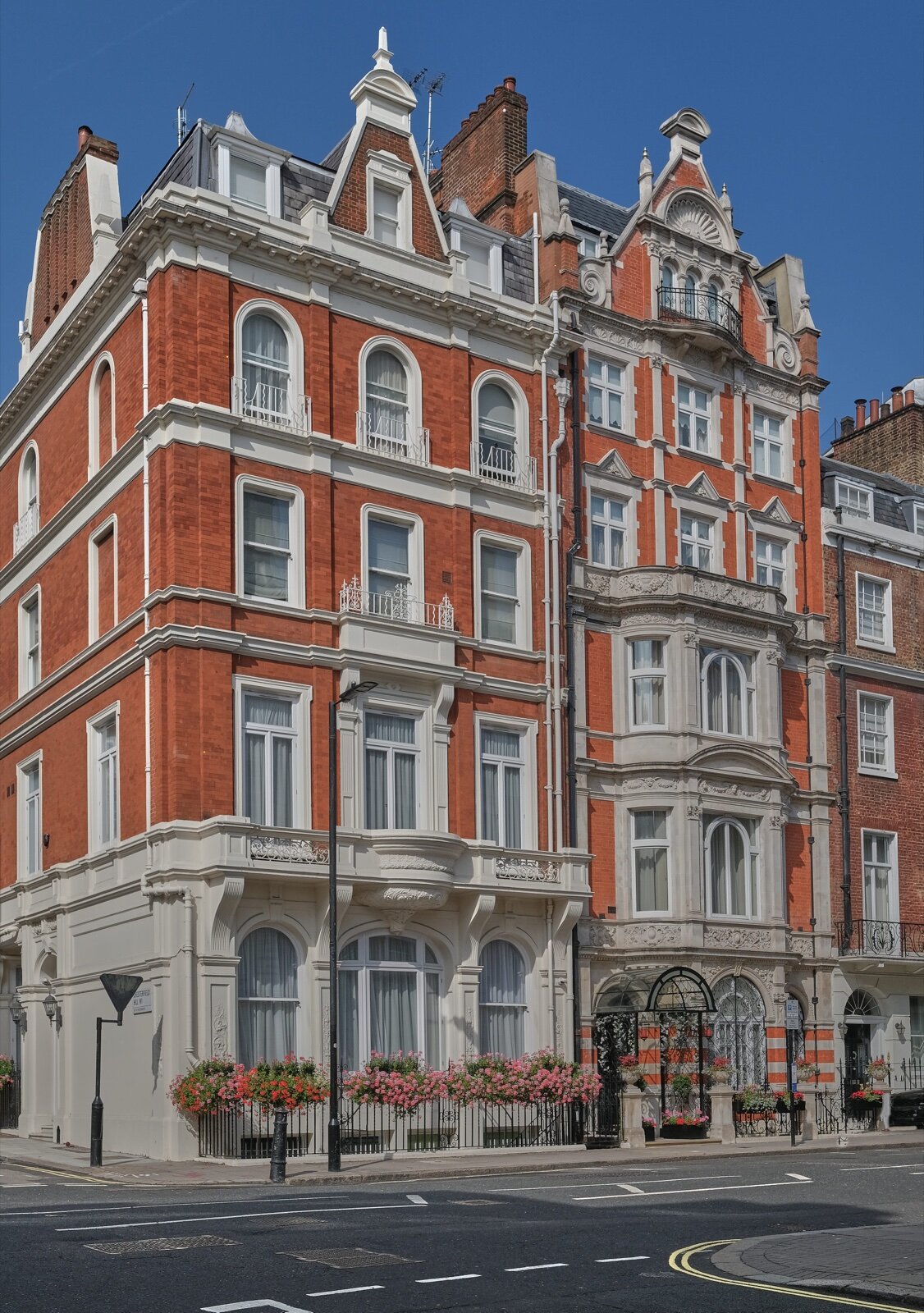
Hill Street, Mayfair. Photo: 30 Hill Street, Mayfair by Anthony O'Neil (CC BY-SA 2.0), via Wikimedia Commons.
Where Mayfair is and what it feels like
Mayfair sits at the heart of the W1 postcode, bounded by four of London's busiest edges but calm in the middle. The scale is Georgian: measured brick terraces, garden squares and the odd cobbled mews, laid out on the Grosvenor estate from the 18th century. Money is quiet here rather than loud. Step one street back from Oxford Street or Piccadilly and the crowds drop away, which is exactly why people who can live anywhere choose it.
Shopping and tailoring
Mayfair is where London does luxury retail. Old and New Bond Street carry the flagship names in fashion, jewellery and watches, along with the major auction houses. Savile Row remains the home of British bespoke tailoring, its cutting rooms still making suits by hand. The Burlington Arcade, opened in 1819, is a covered Regency shopping parade running up from Piccadilly, and Mount Street and South Molton Street add more boutiques and galleries. Even if you are only window shopping, the streets themselves are the attraction.
Squares and green space
The garden squares are Mayfair's lungs. Berkeley Square, with its great London plane trees planted in the 1780s, is the most famous, immortalised in song. Grosvenor Square is the largest, long associated with the United States, which kept its embassy here until it moved south of the river in 2018. On the western edge, Park Lane runs along Hyde Park, and Green Park sits just to the south, so open space is never more than a short walk away.
History and culture
For all the retail, Mayfair carries real history. Handel and, two centuries later, Jimi Hendrix both lived on Brook Street, now the Handel Hendrix House museum. Blue plaques dot the district, marking former homes of writers, statesmen and composers. The Royal Academy of Arts sits just over the Piccadilly edge at Burlington House with its changing exhibitions. Shepherd Market, a tiny village-like enclave of narrow lanes, pubs and restaurants, is a reminder of the old May Fair the area is named after. You can check current exhibitions at the Royal Academy.
Eating, drinking and staying
Mayfair is W1's fine-dining capital, home to many of London's most coveted tables and grand hotel restaurants. It is also hotel country: Claridge's on Brook Street, The Connaught on Carlos Place and The Dorchester on Park Lane are institutions in their own right. For the detail, see our guides to the best restaurants in Mayfair and the best luxury hotels in Mayfair, and the where to eat in W1 pillar for the wider postcode.
Getting there
Mayfair is well served by the Underground: Green Park (Jubilee, Piccadilly and Victoria lines) on the south, Bond Street (Central, Jubilee and the Elizabeth line) on the north, Marble Arch to the north-west and Hyde Park Corner to the south-west. The Elizabeth line at Bond Street has made it quicker to reach from the City, Heathrow and the east. Once you arrive, Mayfair is best explored on foot. For the rest of the area, head back to the W1 London homepage.
Frequently asked questions
What is Mayfair known for?
Mayfair is known as London's most exclusive district: luxury shopping on Bond Street, bespoke tailoring on Savile Row, grand Georgian garden squares, five-star hotels like Claridge's and The Connaught, and some of the city's finest restaurants, all within the W1 postcode.
Is Mayfair worth visiting?
Yes. Even without spending a fortune, Mayfair is one of the most rewarding parts of London to walk: elegant streets, the Burlington Arcade, Berkeley and Grosvenor Squares, blue plaques, Shepherd Market and the Royal Academy nearby all make for a good day out.
What are the main streets in Mayfair?
Old and New Bond Street for shopping, Savile Row for tailoring, Mount Street and South Molton Street for boutiques, Park Lane along Hyde Park, and Brook Street and Grosvenor Street among the historic residential and hotel streets.
Which Tube stations serve Mayfair?
Green Park, Bond Street, Marble Arch and Hyde Park Corner all sit on the edges of Mayfair. Bond Street now also has the Elizabeth line, which makes the area quick to reach from the City, the east and Heathrow.
Why is Mayfair so expensive?
A limited supply of grand period property on the historic Grosvenor estate, a central location beside Hyde Park and the West End, and a concentration of luxury retail, hotels and offices keep demand high and prices among the highest in the country.