
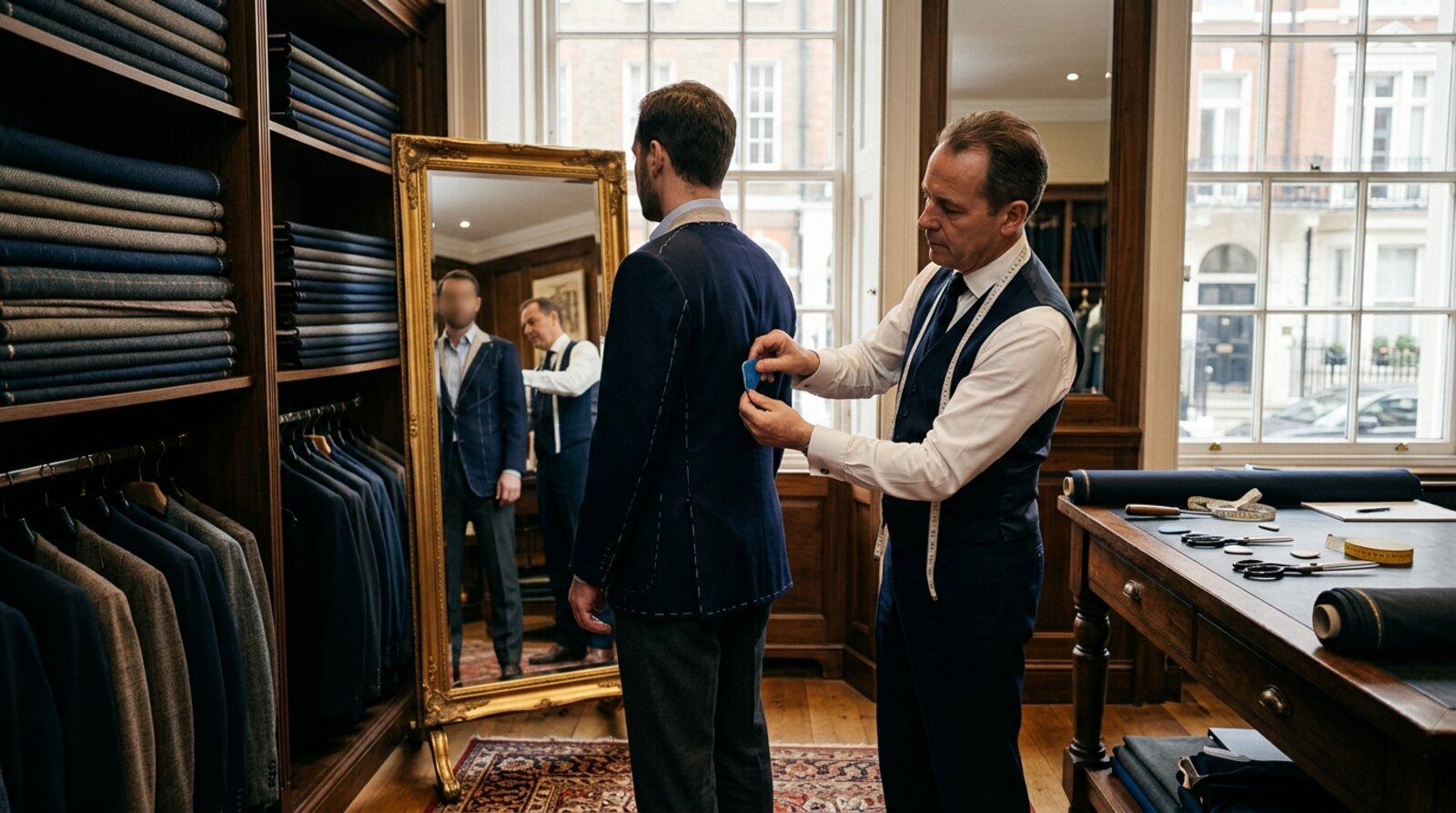
A 2026 bespoke tailoring price guide for a first commission, from entry-level houses to the full Savile Row standard
See the Price BandsA Savile Row suit is the kind of purchase people research for months before they walk through a tailor's door. The short answer is that a bespoke suit on or around the Row runs from roughly 1,600 pounds at the most accessible houses to about 6,700 pounds and beyond at the longest-established names, with premium cloth and extra fittings pushing the figure higher still. The longer answer, which matters if this is your first commission, is that the number depends on which level of tailoring you are buying and what goes into the garment.
This guide is written for the first-time buyer standing in Mayfair deciding whether to commit. We break the market into three honest price bands, explain what your money buys at each one, set bespoke against made-to-measure so you are not comparing two different things, and look at the running costs and the cost per wear over the decades a good suit can last. Every figure here comes from the tailors themselves and the Savile Row Bespoke Association standard, not guesswork.
For the wider picture of the neighbourhood and where the tailoring district sits within it, read our full Mayfair guide. This page does one thing: it tells you what a Savile Row suit costs and why.
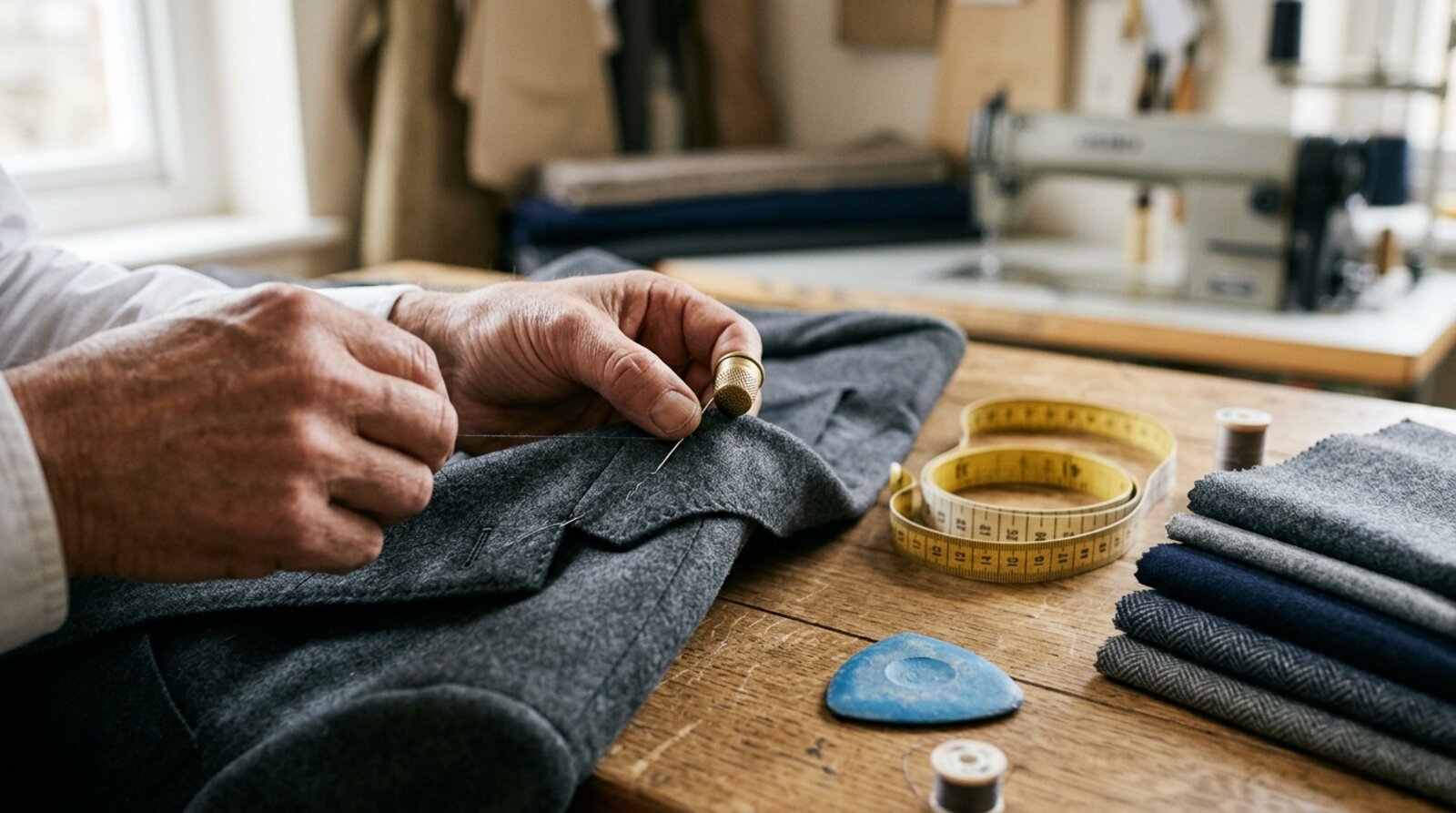
A two-piece bespoke suit carries a minimum of 50 hours of hand work under the Savile Row Bespoke Association standard, and houses such as Huntsman put up to 80 hours into a single garment. Expect around 28 to 30 measurements taken by hand, an individually cut paper pattern made for you alone, and a minimum of three fittings across roughly eight to twelve weeks. Members must offer a choice of at least 2,000 cloths and work within 100 yards of Savile Row itself. Prices for true bespoke start near 1,600 pounds and reach 6,700 pounds or more.
Where the money sits, from the accessible end to the heritage houses
The most accessible genuine bespoke comes from newer Savile Row houses that have built efficient workshops without cutting the craft. Cad and The Dandy, for example, starts full bespoke at about 1,600 pounds for a two-piece and climbs through cloth tiers toward 2,800 pounds, with the difference driven by the wool you choose rather than the service. This band suits a first-time buyer who wants a pattern cut for them and a hand-finished garment, but is not paying for a century of name.
The middle band covers established tailors and the more refined cloth and finishing of a recognised house, along with options such as a third piece, a waistcoat, or a heavier hand-canvassed construction. Edward Sexton's offshore bespoke two-piece, which pairs Savile Row cutting with overseas tailoring, sits near the lower edge of this band at around 2,500 pounds, while full house bespoke from the same names rises through it.
The top band is the traditional Row at full stretch. Huntsman, founded in 1849, begins bespoke at around 7,000 pounds for a two-piece and builds each garment with up to 80 hours of hand work. Other heritage houses sit between 4,600 and 6,700 pounds for a starting commission. Here you are paying for a master cutter, a fully hand-made garment, the deepest cloth libraries and the standing of an address that has dressed clients for generations. Premium or rare cloth lifts the figure well past the headline price.
There is no shame in starting at the entry band. A first suit teaches you what you like, and many buyers move up a band for their second commission once they know how they wear tailoring. Choosing the right house for your budget and taste is the next decision, and we cover it in detail in our guide to choosing a Savile Row tailor and what to expect at your first fitting.
The gap between a 200 pound suit and a 5,000 pound one is not vanity. It is labour, materials and location, and each is measurable.
The single biggest cost is human time. The Savile Row Bespoke Association requires a minimum of 50 hours of hand work in a two-piece suit, and the more traditional houses go well beyond it, with Huntsman citing up to 80 hours per garment. That is one to two working weeks of skilled hand stitching, canvassing and shaping by people who train for years to do it. Labour at that level, in central London, is the foundation of the price.
A bespoke commission starts with around 28 to 30 measurements taken by hand and turned into a paper pattern cut for you alone by a master cutter. That pattern is yours, kept on file, and is the reason a second suit fits without starting from scratch. Made-to-measure skips this step by adapting an existing block, which is a large part of why it costs less.
Houses offer a choice of at least 2,000 cloths, and the wool you pick moves the price by hundreds of pounds. A lightweight English worsted sits at the lower end, while rare bunches, vintage cloth or fine blends with cashmere or vicuna sit far above it. Wrapped around all of this is the cost of a workshop and showroom within 100 yards of Savile Row, one of the most expensive retail addresses in the world.
Two different things at two different prices, often confused
Made-to-measure starts from a pre-existing block pattern that the tailor adjusts to your measurements and preferences. Most of the garment is machine-made, often in an overseas factory, then finished to your spec. It is a genuine step up from buying off the peg and gives a noticeably better fit, and the price reflects the lighter touch of hand work involved.
Bespoke begins with a brand new paper pattern cut by hand for you, a fully hand-canvassed body, dozens of hours of hand work and a series of fittings. It is the only level that earns the Savile Row name under the association's standard. You pay more because more is made, and because the garment is shaped to your posture rather than an average.
For most first-time buyers, the choice comes down to budget and how often the suit will be worn. Our first-fitting guide walks through how each house handles the process.
It helps to see the price as a bundle rather than a single sticker. A genuine bespoke commission includes more than the finished jacket and trousers.
You are buying a suit cut to your exact frame, including the shoulder that sits unevenly, the stance that leans forward, and the proportions an off-the-peg suit ignores. This is the part most buyers feel first: a jacket that moves with you and trousers that hang clean without a single off-the-shelf compromise.
The paper pattern stays with the house, which means your second and third suits start from a known fit and need fewer adjustments. Over time you build a relationship with a cutter who learns your taste, which is part of why long-standing clients return for decades.
Association members provide first-class after-care, including sponging, pressing, repairs and button matching. Because cloth is left in the seams, a good bespoke suit can be let out or taken in years later as your body changes, extending its life far beyond a fused high-street jacket that cannot be reshaped. That longevity is where the cost per wear starts to make sense.
A 4,000 pound bespoke suit worn 40 times a year for ten years works out near 10 pounds per wear, before any re-tailoring extends its life further. A buyer who wears tailoring regularly and keeps a suit well can find that the cost per wear undercuts a wardrobe of cheaper suits replaced every few years. The maths only works if you wear it, so the value case is strongest for professionals and frequent wearers rather than a once-a-decade occasion.
The fittings needed to finish your first suit are part of the price at most established houses. Later changes are a separate matter. As your body shifts over the years, a tailor can let out or take in a bespoke garment because cloth is held in the seams, but a significant reshape carries its own charge. Ask the house for its alteration rates before you commit, so there are no surprises down the line.
Fine wool suits are best brushed, aired and pressed rather than dry-cleaned often, since frequent cleaning shortens a cloth's life. Specialist pressing in central London costs a modest amount per visit, and many houses include sponging and pressing in their after-care. Budget for occasional specialist cleaning rather than regular high-street dry-cleaning.
A few habits keep a bespoke suit looking its best for the decades it is built to last:
For where the tailoring district sits among the area's other addresses, see our W1 luxury shopping guide.
A Savile Row bespoke suit ranges from roughly 1,600 pounds at the most accessible houses to 6,700 pounds and beyond at the longest-established names. Cad and The Dandy starts full bespoke at about 1,600 pounds for a two-piece, while Huntsman begins at around 7,000 pounds. Premium cloth, a three-piece cut and extra fittings push the final figure higher.
The price reflects work, not markup alone. A two-piece bespoke suit carries a minimum of 50 hours of hand work under the Savile Row Bespoke Association standard, and houses such as Huntsman put up to 80 hours into a garment. Add an individually cut paper pattern, around 28 to 30 measurements, several fittings, fine wool cloth and the cost of a Mayfair address, and the figure adds up.
Made-to-measure adapts an existing block pattern to your measurements and is largely machine-made, usually costing from a few hundred to around 3,500 pounds. Bespoke begins with a brand new paper pattern cut by hand for you alone, is hand-canvassed and assembled with many hours of hand work, and includes several fittings. True Savile Row bespoke starts at roughly 1,600 pounds and rises from there.
Expect a minimum of three fittings on Savile Row: a basted fitting on a loosely tacked shell, a forward or second fitting, and a final fitting before completion. Many houses see a first-time client more often, and the full process commonly takes around eight to twelve weeks or longer for a first commission.
Most established houses include the fittings needed to finish your first suit and offer after-care such as pressing, repairs and button matching. Reshaping a bespoke garment years later as your body changes is usually possible because cloth is left in the seams, though significant alterations carry a separate charge. Confirm the after-care policy with your tailor before you order.
A well-kept bespoke suit can last decades, which changes how the price reads. A 4,000 pound suit worn 40 times a year for ten years works out near 10 pounds per wear before re-tailoring extends its life further. For a buyer who wears tailoring often and wants a precise fit, the cost per wear can undercut a wardrobe of cheaper suits replaced every few years.
You can read the official bespoke standard, including the hand-work minimum and membership criteria, at the Savile Row Bespoke Association before you choose a house.
Once you have settled on a budget and a price band, the next decision is which house to commission and how to handle the first appointment. Our companion guide, Choosing a Savile Row Tailor: What to Expect at Your First Fitting, walks through how to pick a house, what happens at the basted fitting, and how to brief a cutter on a first commission. It is the natural next read after this one.
For more of the neighbourhood, return to our W1 London homepage for an overview of every district, or explore our luxury shopping guide for the wider Mayfair retail scene. For business enquiries, contact us at advertise@thew1london.com.